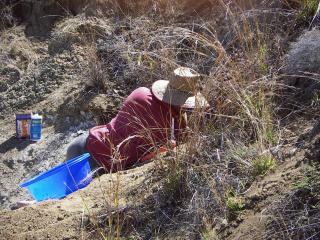
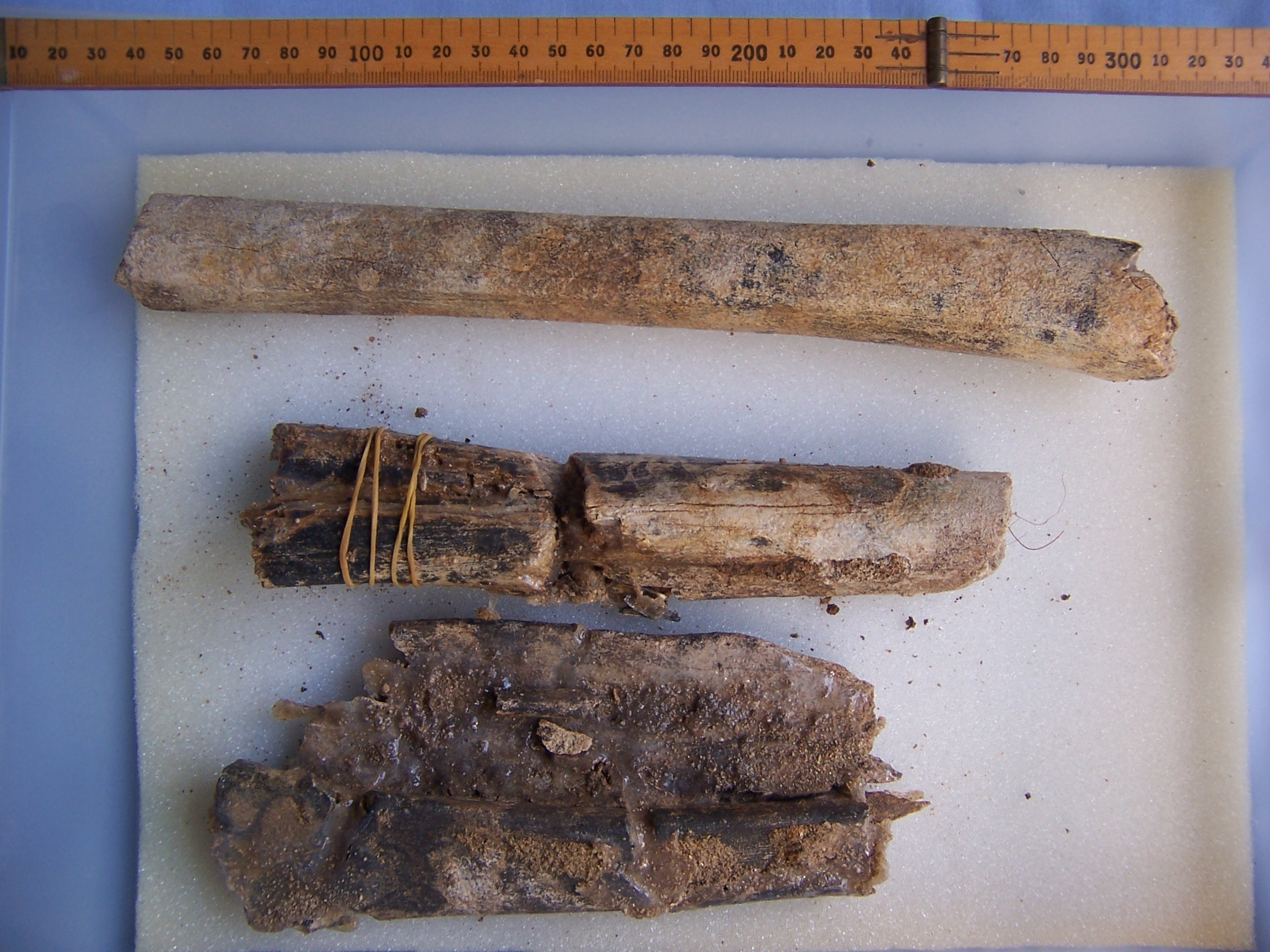
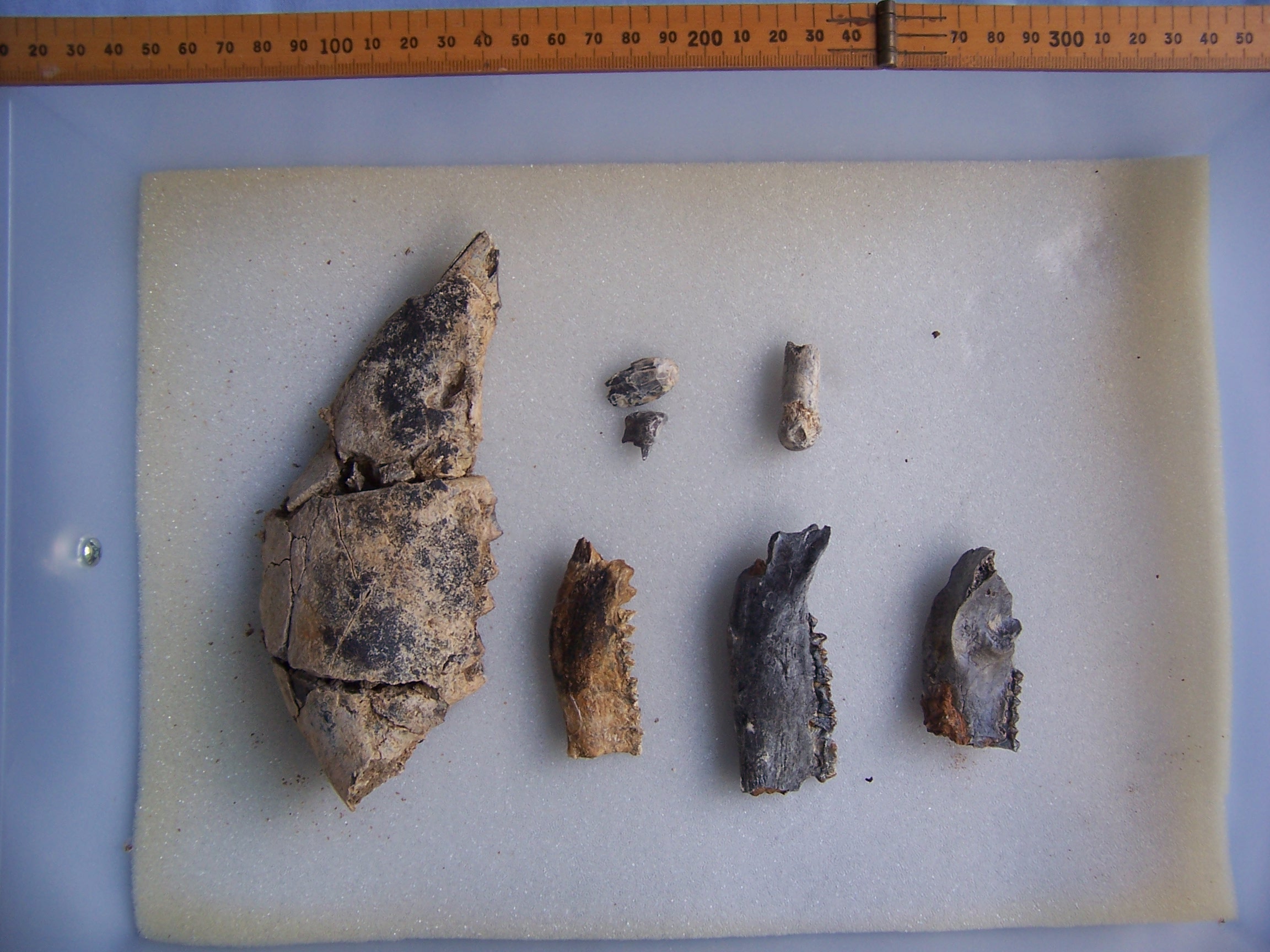
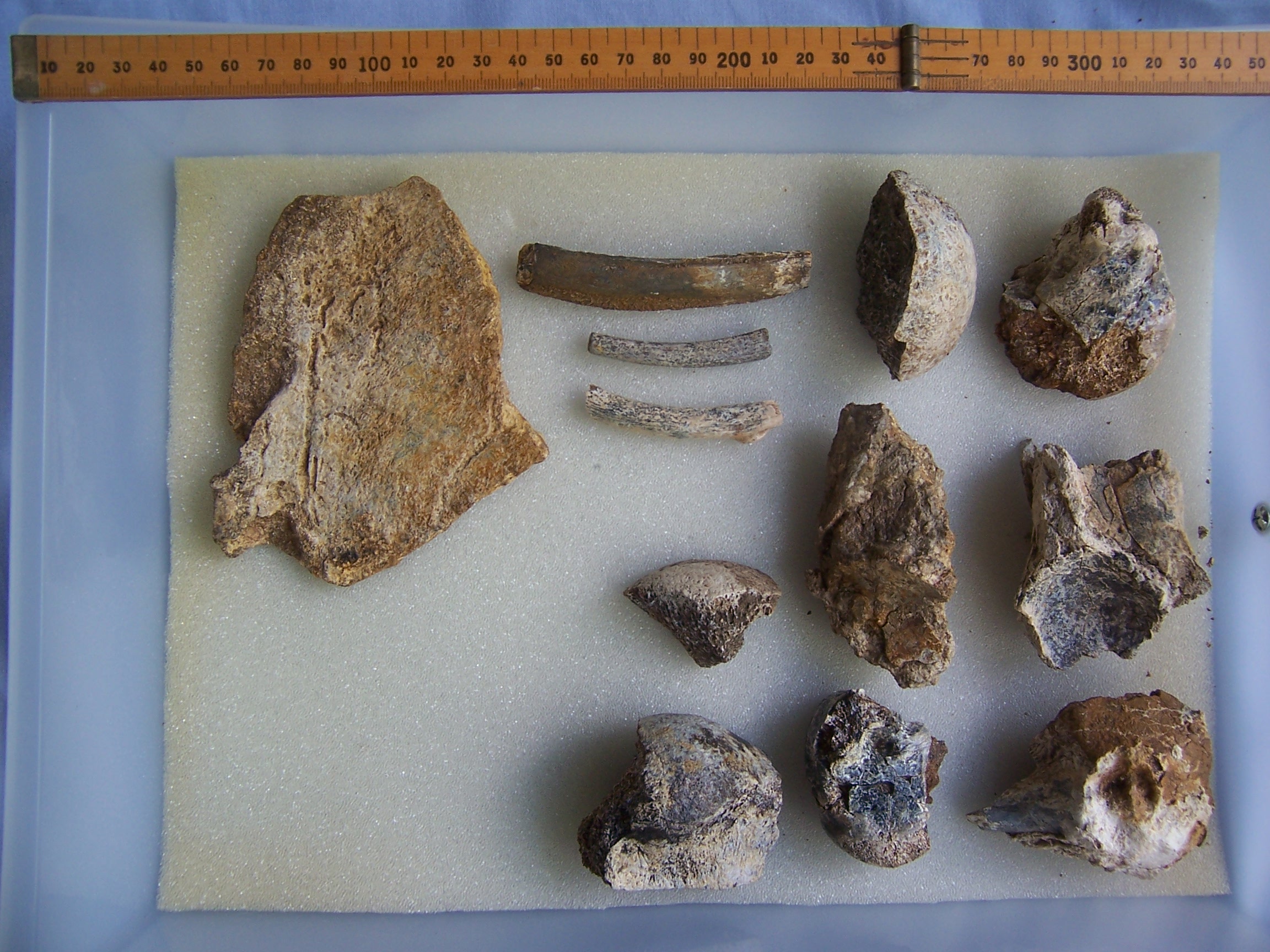
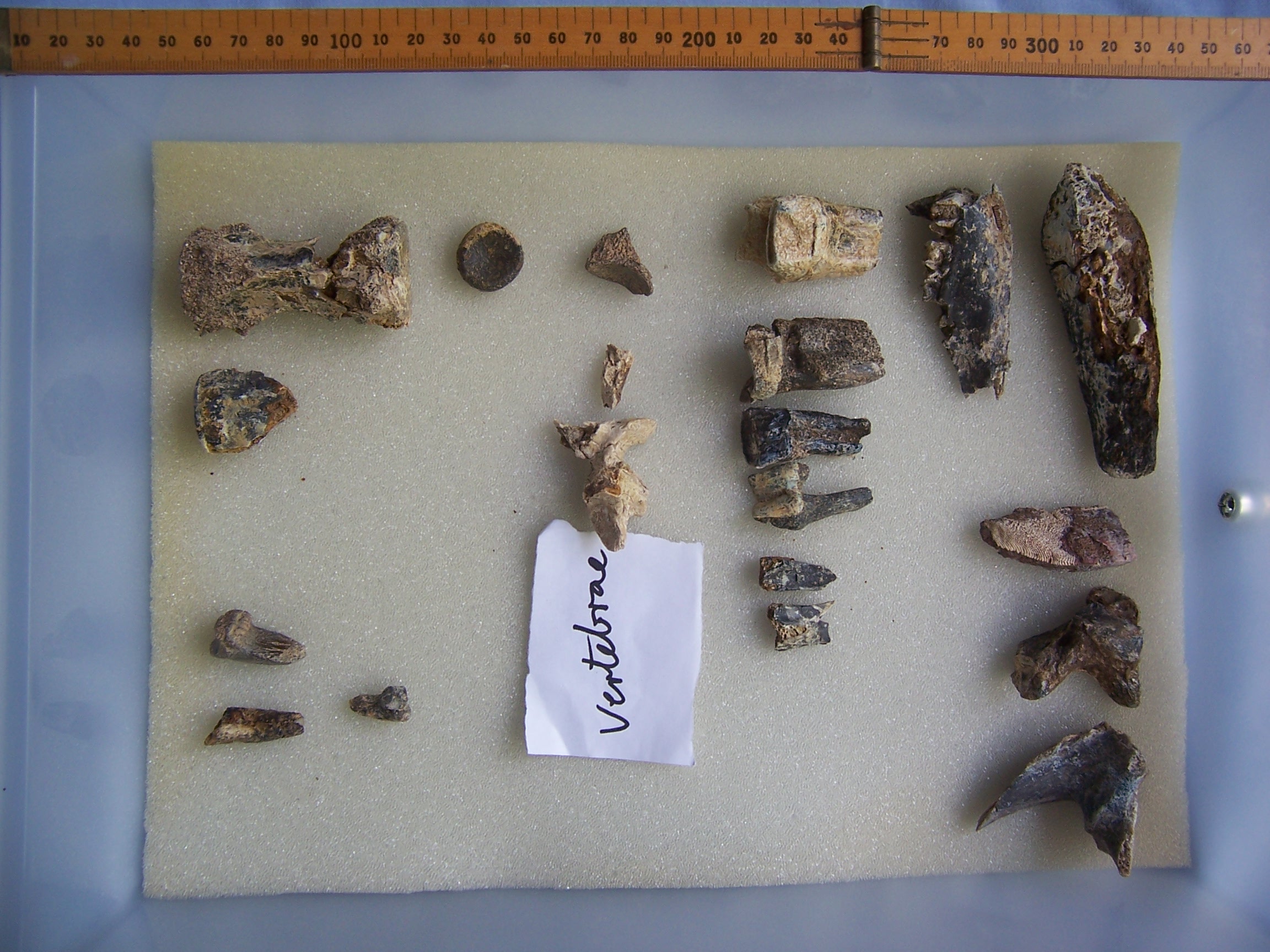
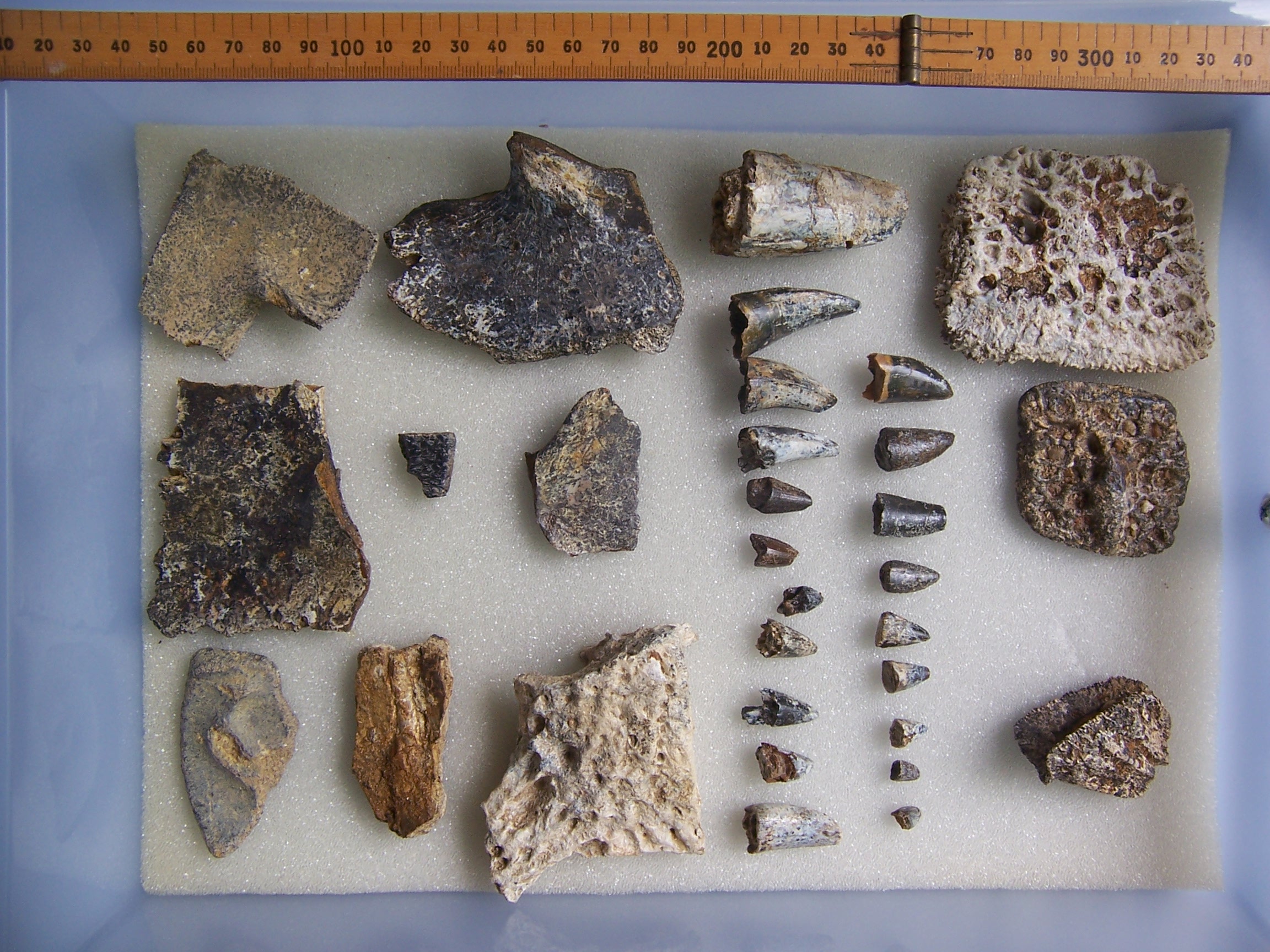
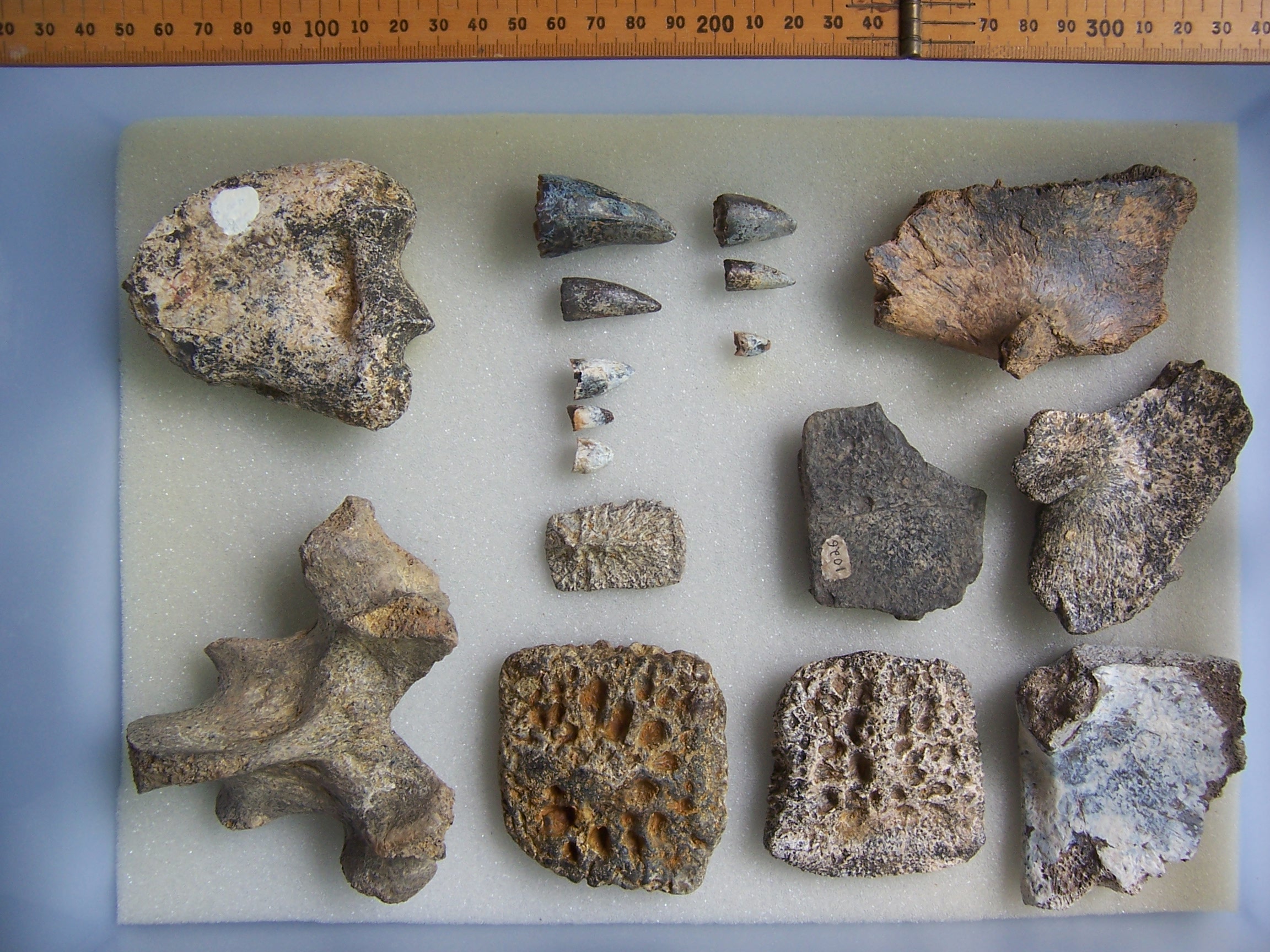
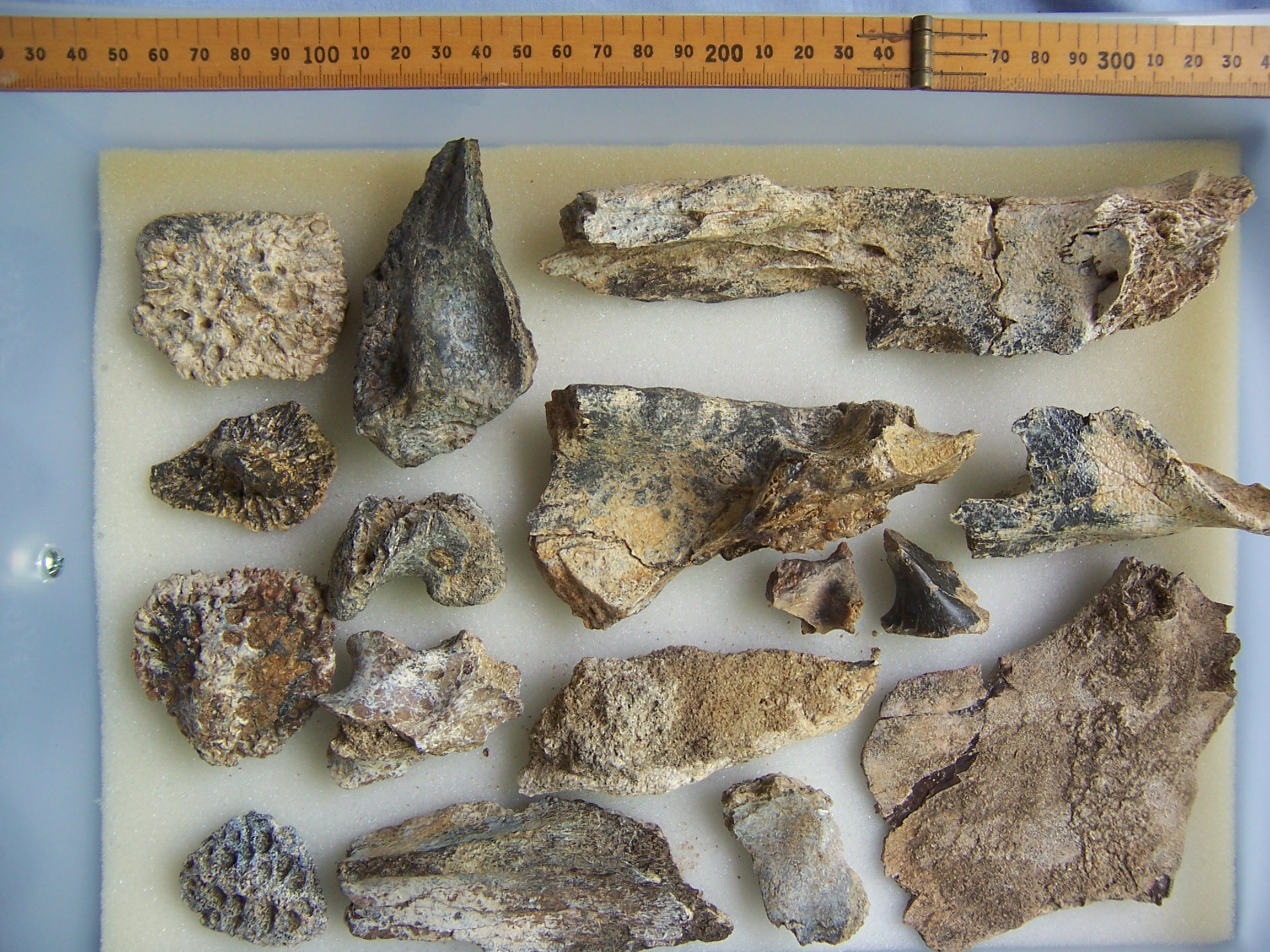
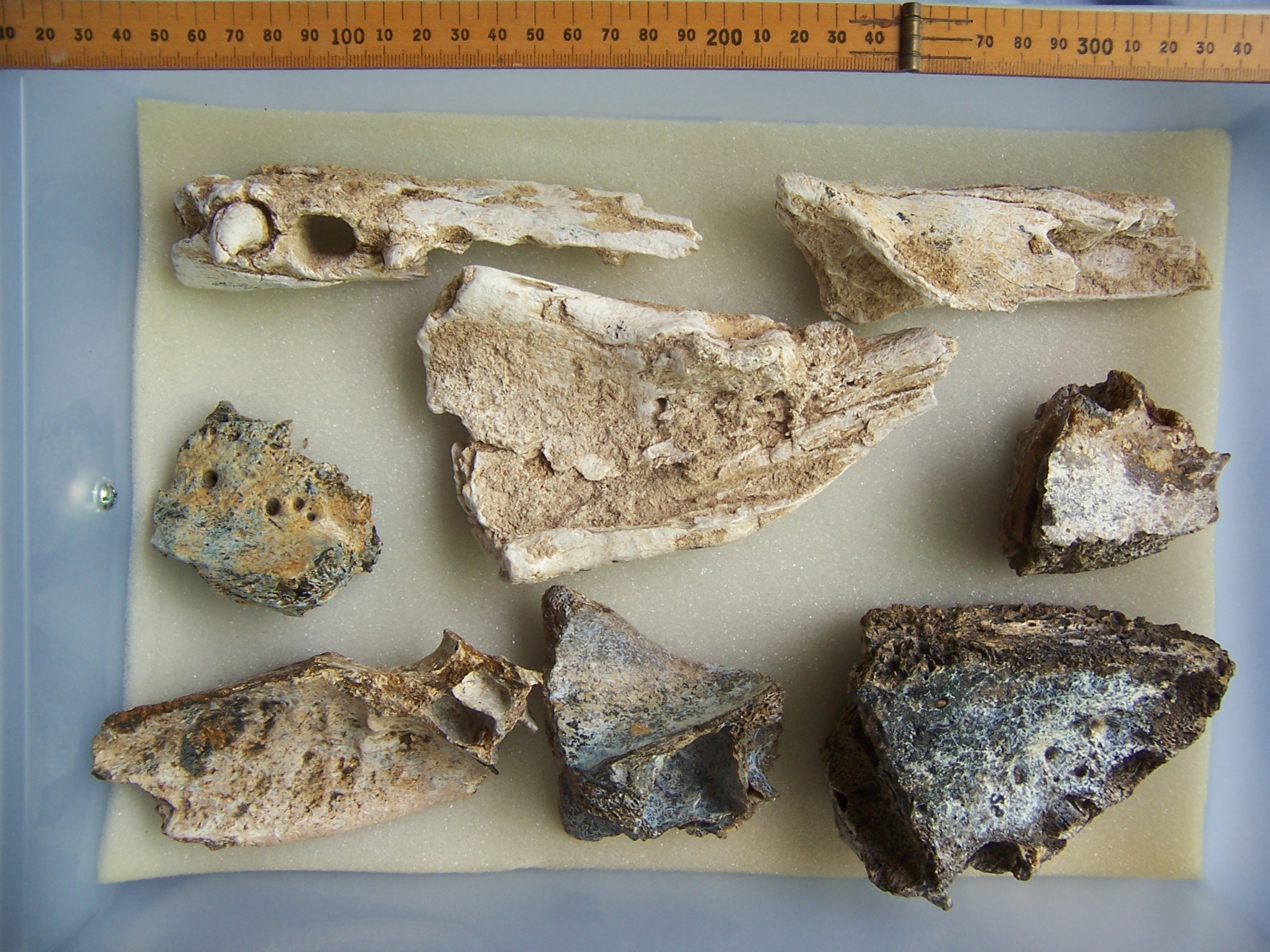
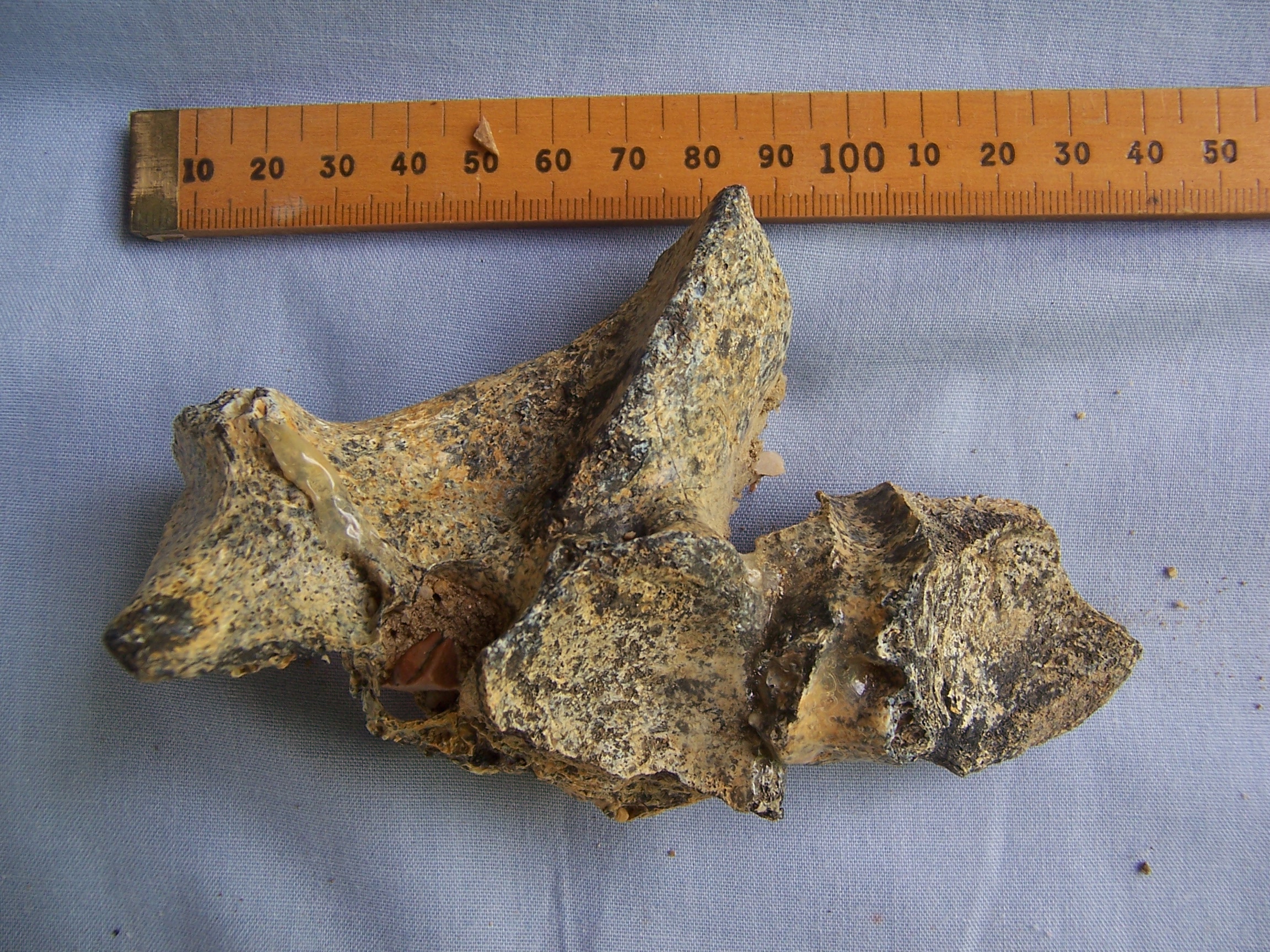
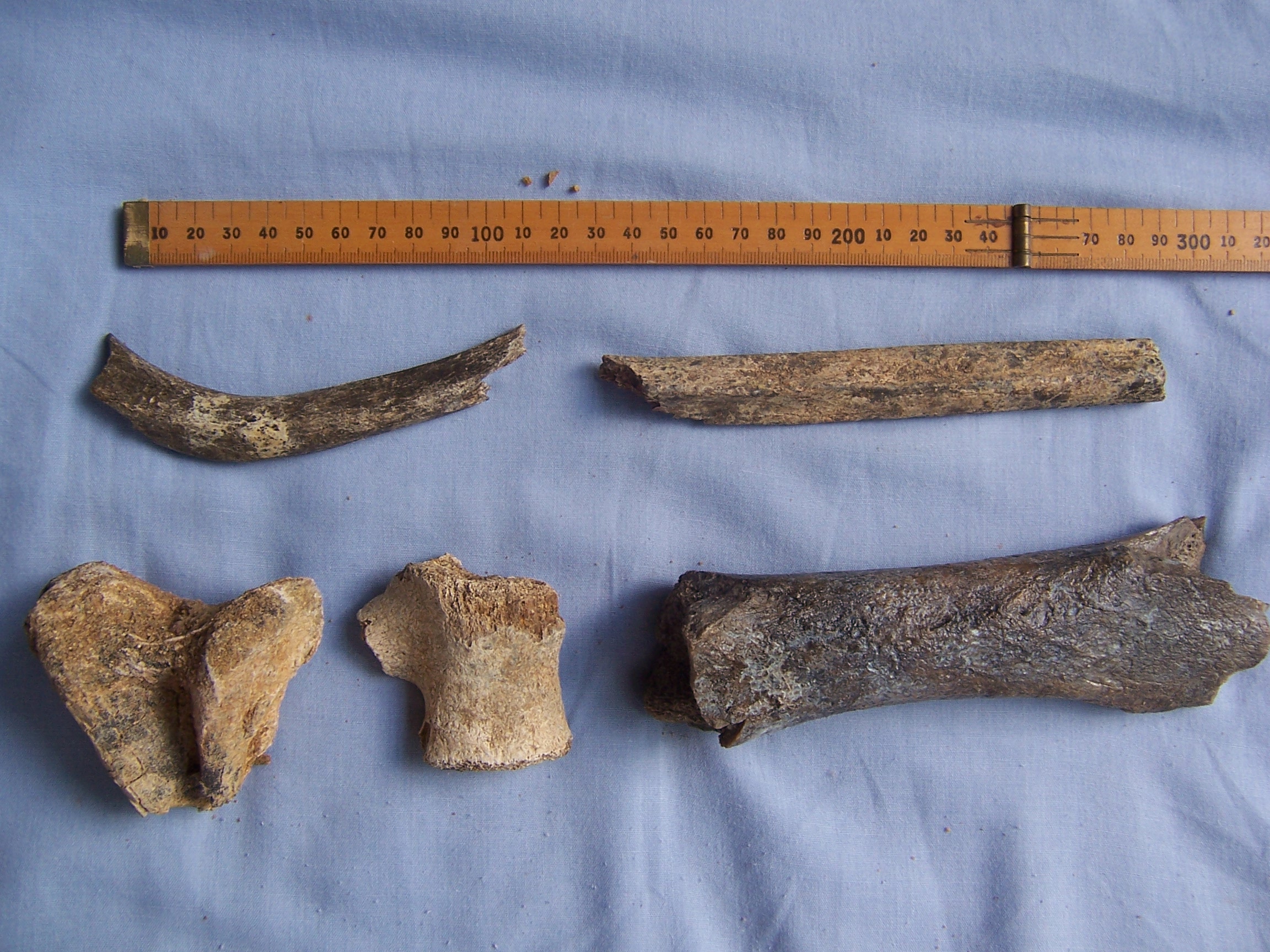
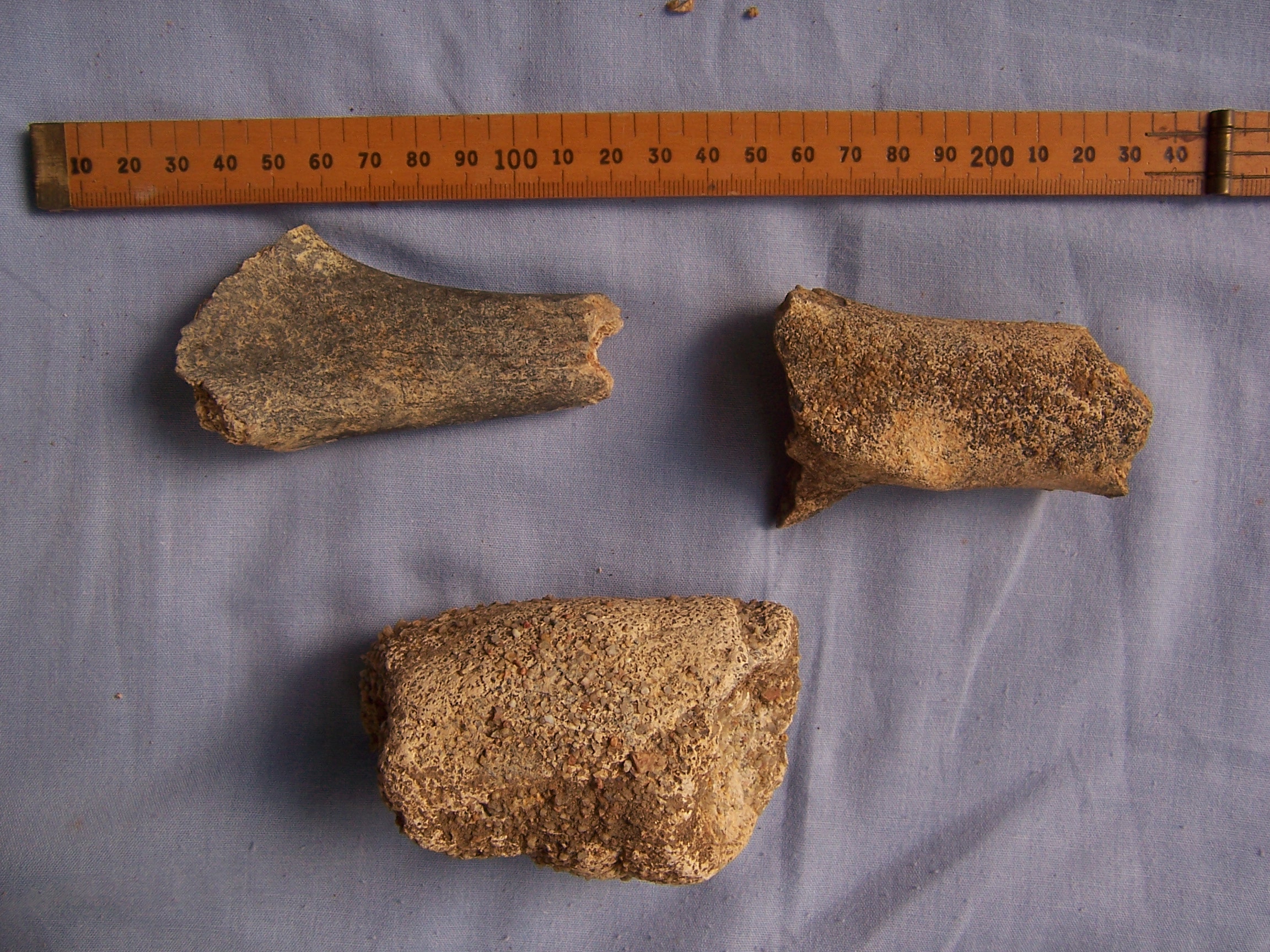
The Far North Queensland Fossil Heritage Expeditions 1992-2006
carried out 14 digs at the request of landowners, at a time and under
conditions suitable to them. Two sites were explored a 4.2million year old
pool / spring site for megafauna and a 110 million year old shallow lagoon
site for marine reptiles. By agreement, the owners decided what would be
done with the finds. As a result, all finds were donated to Australian
museums and universities. The expeditions linked young traditional owner's
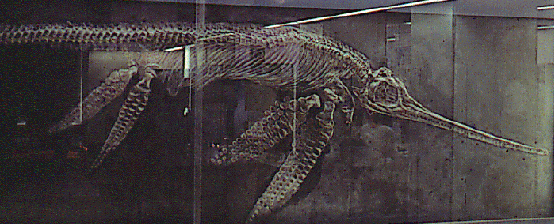
affinity with the land and cutting edge science. An ichthyosaur assembled
over three months using the home economics room of Mt. St.Bernard College,
Herberton Queensland is on permanent display at the Queensland Museum's
centre in Richmond. The megafauna specimens produced a number of
surprises. The fourteen expeditions 1992-2006 illuminated a genuine public
interest in the earth sciences and planted the seed for the creation of
this website, Earth Science Australia which went on-line via the rural and
remote, pioneer, volunteer ISP Bushnet in 1996.
" Hit a block of rock with a hammer . It splits apart.
And there, glinting in the first rays of the sun to shine on it...
protrudes the gem like tooth of a fossilised creature.
You are the first human being ever to see it.
Few hearts do not beat faster at that enchanting moment."
Sir David Attenborough, London 1991
in the introduction to Riversleigh by Michael Archer, Suzanne J. Hand
and Henk Godthelp ISBN 0 7301 0314 5
Pregnant, sick and weak, unable to eat, with just two small gastroliths
(grinding stones swallowed and used for breaking up food and ballast) and
three fish vertebrae in its stomach Ichthyosaur 960901, used its last
remaining energy to head out to deeper water.
Having made its way away from immediate predators, the 5 to 7 metre long
dolphin look-alike and its unborn baby, died.
Its body quickly bloated in the warm, shallow seas that existed then, 100
million years ago, causing it to float even higher in the water than in
life.
After a while its rotting carcass was attacked and eaten; ribs and all.
Buoyancy was lost and the heavy head, with spinal column attached dropped
into the depths. The massive jaws speared into the oxygen poor gritty
muck.
The spinal column and attached flesh, having been relieved of the weight
of the head, was now able to float again, attached to the head anchored in
the mud. Eventually the remaining flesh was eaten or rotted and the spinal
bones deposited in a radial pattern on the surface of the mud.
Time passes. Mud rains on mud, deeper and deeper, slowly transforming bone
to rock. Flowering plants replace conifers, cycads and ferns. Mountains
build and erode. Time passes.The seas dry. The dinosaurs, rulers of the
earth reach their zenith, then fade. Volcanoes come and go. Snakes, birds
and bees appear. Mammals stalk the night and dominate the continents. They
return to the sea as whales. Time passes. Giant sharks rule the sea. Ice
ages come and go. Time passes. Rainforests cover Australia - gradually
drying. Rock, once bone is exposed - a chance contact with a human.
A skeleton in a perilous place is excavated. Fourteen days later a freak
storm, 200mm of rain in 24 hours, inundates the small gully; but the
skeleton is already safe. A three dimensional jigsaw puzzle is cleaned,
protected, reassembled over 3 months in the Home Economics room by the
students of Mount St. Bernard College and forwarded to the The
Queensland Museum - Kronosaurus Korner for all to see.
The Discovery of Ichthyosaur 960901
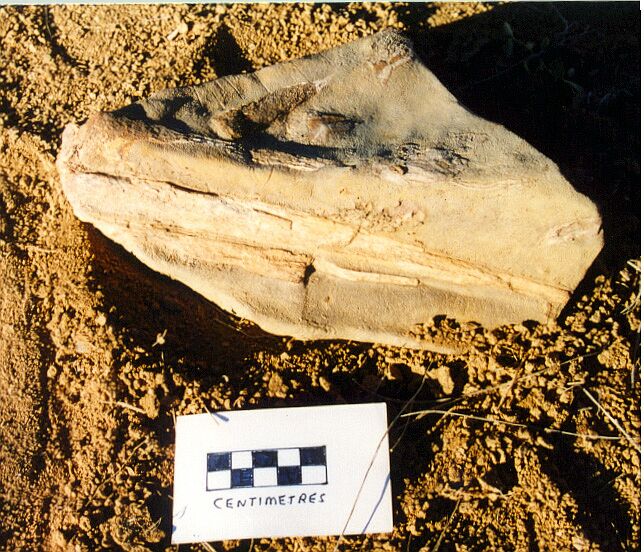
Ichthyosaur 960901 lay barely
visible in the sunlight - just a glimpse of a few vertebrae. It emerged
from its 100,000,000-year-old time capsule relatively intact. The
preservation of any reptile remains over this mind-bendingly long period
of time is a very chancy affair. - a miracle in itself.
Only an infinitesimally small proportion of even the most abundant
creature that lived in previous geological periods have left any trace of
their passing.
Big and massive hard parts preferentially survive, particularly if they
become entombed in lime, sand or mud.
The fossil record is a record of the ability of certain hard parts of
creatures to endure. Vast numbers of species, and probably nearly all
softbodied creatures, of which there is no trace or record, must have
existed.
As a chronicle, it is an imperfect and incomplete series of discarded
fragments of life through space and time.
As a tool it is probably one of the most powerful things we have in
understanding the nature of change in natural environments and the
temporary nature of the human condition.
The Fate of Ichthyosaur 970602
We believe the specimen demonstrates that this Ichthyosaur was dead and
floating.
This is curious were Ichthyosaurs susceptible to a particular disease or
did a food source develop a toxic defence?? - many seem to be "floaters"
or is it just that floaters by spearing into the deep mud, increase their
chances of preservation?
Why we think this one was a "floater"
When a floater loses its buoyancy the massive jaw acts like
an anchor dragging the body to the muddy bottom
The massive jaw sometimes "spears" into the muck on an angle while
the rest of the bones spread out over the horizontal surface of the
mud
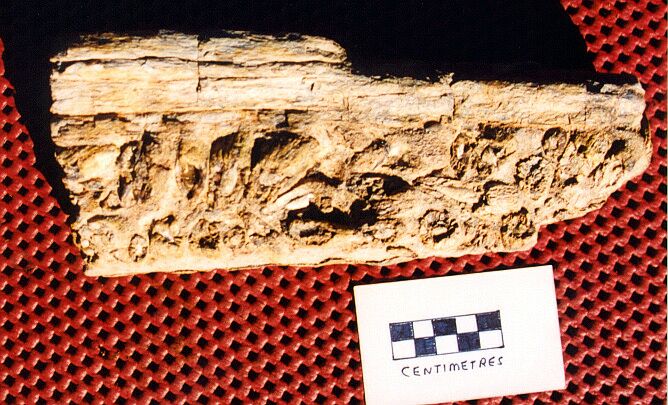
The three visible vertebrae (as moulds on the surface) are also
massive and appear to have pushed through the back of the frail skull
at impact
Remaining vertebrae (as viewed from the end) appear to have stayed
in line with the original line of the spine
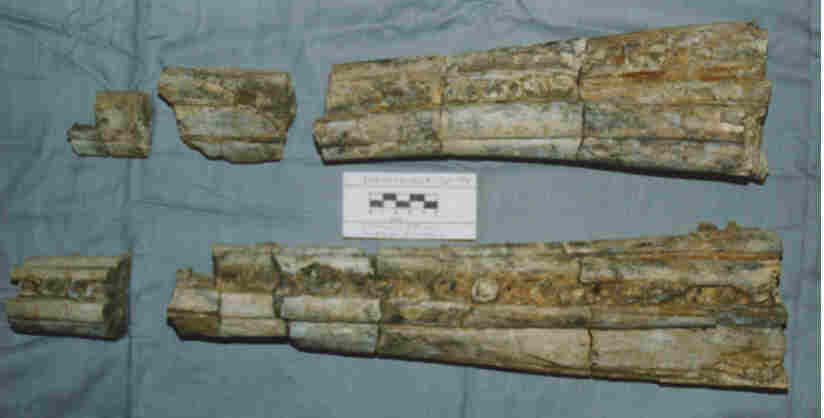
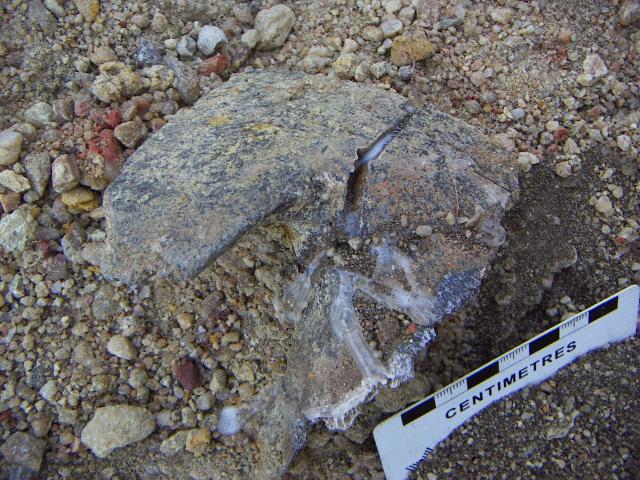
Sinusoidal ("s" shaped) fracturing along the jawbone - in geology this
indicates compression (could also be caused by later compression but
does not seem that evident in the surrounding rock)
Photo Gallery 1996-1997
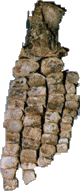
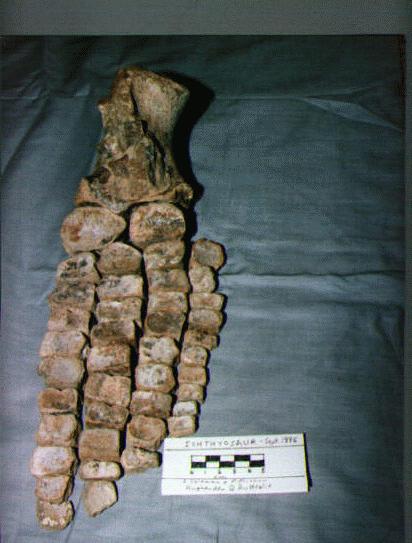
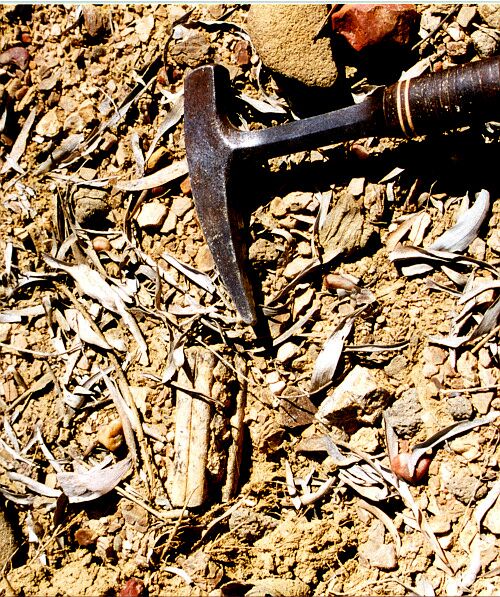
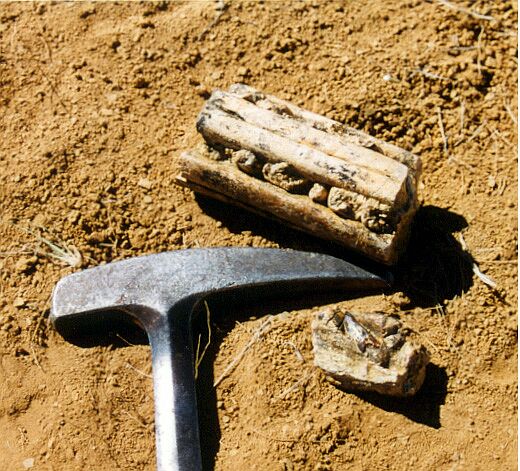
An ichthyosaur paddle is made up of numerous bones called "phalanges"
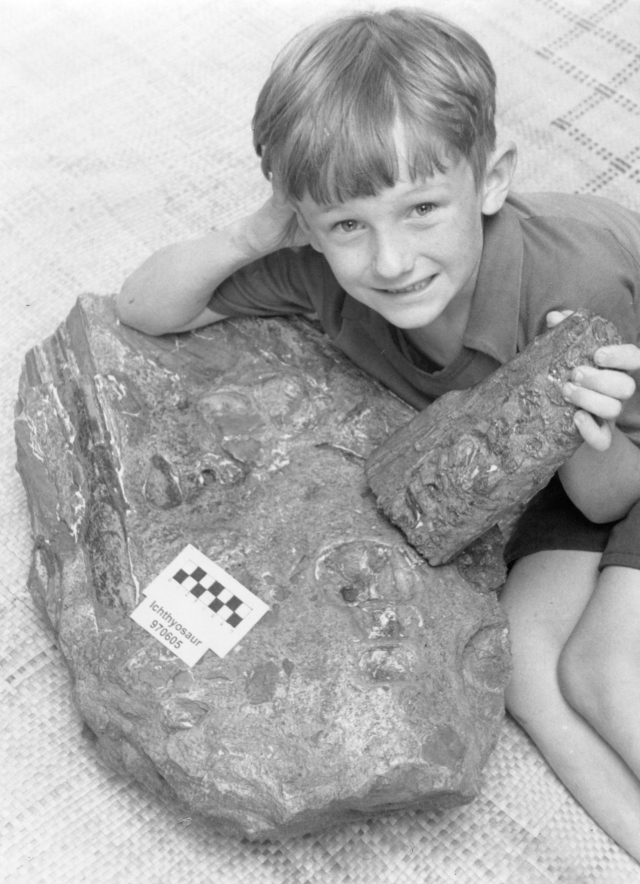
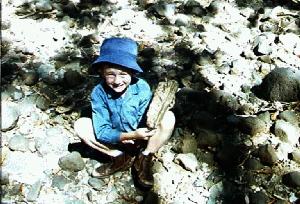
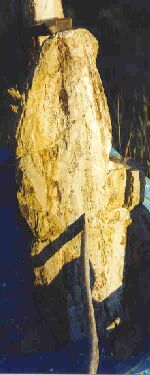
Fred age 7 finds an ichthyosaur
jaw
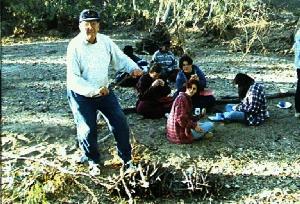
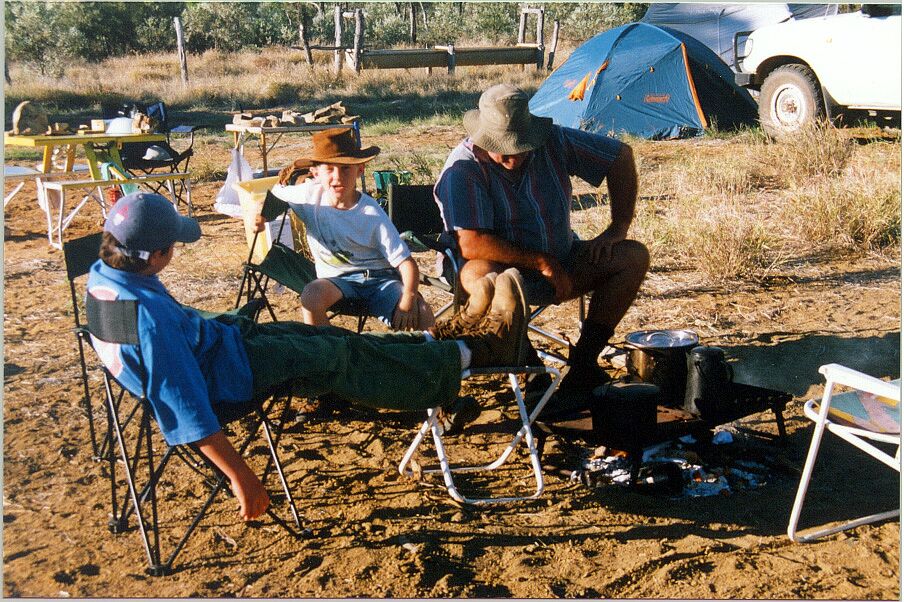
rough camping after a 14 hour drive, Philip from England sorts firewood
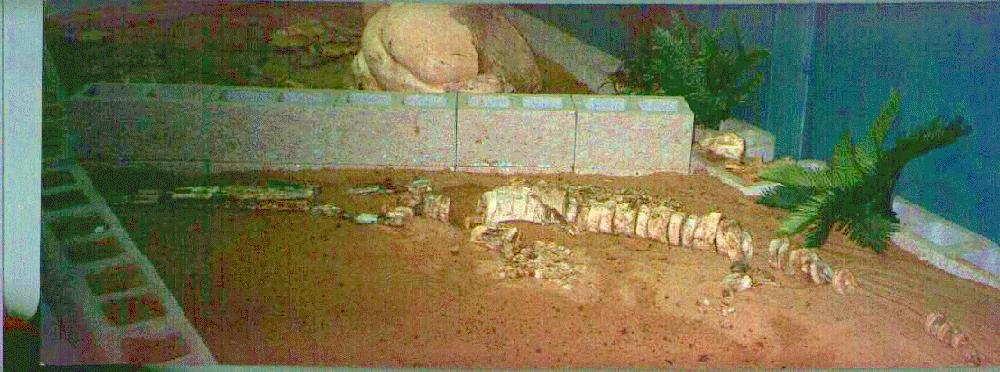
our ichthyosaur on display at the museum 2002
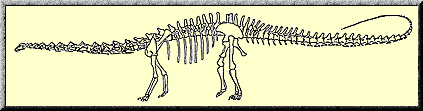
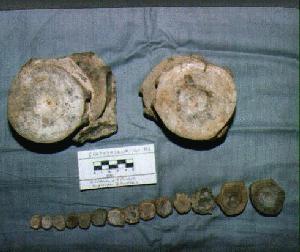
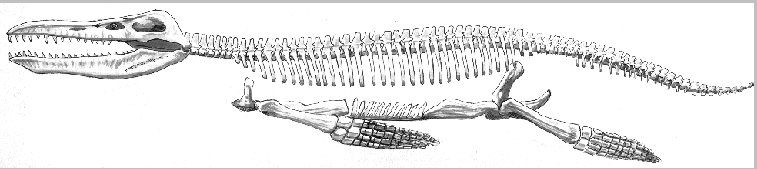
ichthyosaurs have a great number of vertebrae
our logo for 1997
Mary Anning sold the first ichthyosaurs as "Sea Dragons"
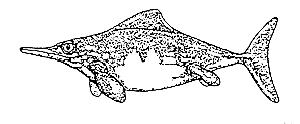
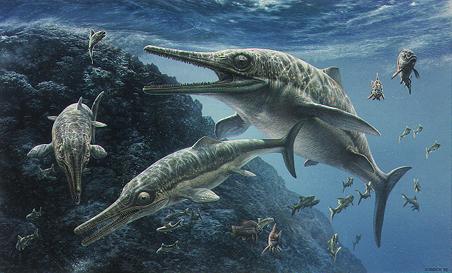
Ichthyosaurs were reptiles perfectly designed for a life of hunting fish,
squids and ammonites in well-lit shallow seas. These "dolphin
look-a-likes" had a streamlined body, fins, paddles and long, narrow jaws.
They had enormous eyes and massive jaws and backbones. They gave birth to
live young.
Dating from the Triassic; common in the Jurassic; Ichthyosaurs survived as
fast-swimming predators into the late Cretaceous ending a span on earth of
about 150 million years.
Platypterygius ("broad - fin") is the most common Ichthyosaur genus found
in Australia and the last of their kind... It existed over a wide range of
both space and time from the Lower Cretaceous to the Early part of the
Upper Cretaceous.
Mary Wade (1984) of the Queensland Museum describes Far North Queensland
finds in detail.
Paddles were long, composed of tightly packed bones called phalanges,
which proximally have a distinctive rectangular shape, like house bricks,
and are arranged in regular columns, or finger rows, numbering up to ten.
Distally, however; the individual elements vary in shape, some being
rectangular, others polygonal and others are rounded giving a
cross-section across the paddles resembling an airfoil.
The paddles are robust and the large size of the pectoral girdles with
which they are articulated suggests they may have been used for paddling
as well as for steering.
The teeth are so closely set that when thejaws close they mesh together
leaving no gaps. This type of dentition - found today in dolphins and
seals suggests a diet of small fast-moving prey such as squid.
Some researchers think that the ichthyosaurs drove their prey down into
unoxygenated waters in the bottoms of lagoons - gill breathers suffocated
and were easy to catch while the air breathing ichthyosaurs were
unaffected.This environment also accounts for the unusually good levels of
preservation, the preservation of squid shells and other materials not
normally well represented in the fossil record.
Such prey require a fast snapping action of the jaws - there is no time to
chew. Muscle scars close to the jaw joint suggest small contractions of
the muscles would have brought about large movements at the tips of the
jaws .
A remarkable large orbit and sclerotic ring suggest Ichthyosaurs had very
large eyes to assist in hunting but it is not evidence of any ability to
echo-locate as in whales.
Buoyancy created adaptations in these creatures. Buoyed up by water, the
vertebrae lost their interlocking joints and were simplified as flattened
discs, bearing neutral spines. Double headed ribs articulated to these
discs and flared out to form a body that was deeply rounded in
cross-section.
The large body mass to surface area would have made the creatures float
much too high in the water to be able to hunt effectively, so instead of
having porous bones their bones are nearly solid. Like crocodiles they
also would have selectively swallowed stones to achieve a more neutral
buoyancy.
1998 Expedition - finding giant squids
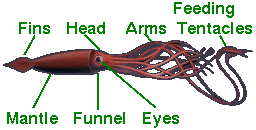
Parts of a giant squid
-click on an expedition image for a larger image
Our Giant Squid 981001
Our 100 million year old giant squid, based on the size of its shell, must
have been about 6 metres long!
Squid fossils of this size are rare possibly due to preservation
requirements.
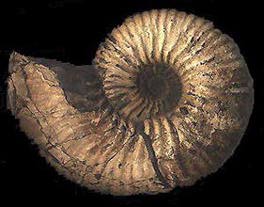
Photo of our 1 metre long squid shell "cuttlebone"
Each "cuttlebone" we saw was different - room for further scientific study
The discovery of squid remains is a very rare event - normally the
"cuttlebone", fragile and weak is rapidly destroyed in an oxygen rich
environment. We believe the site of this discovery is quite unique - an
oxygen poor deep lagoon full of alkaline mud, beside a reef.
Far North Queensland Fossil Heritage Expedition
2000 - mystery tracks
expedition logo 2000
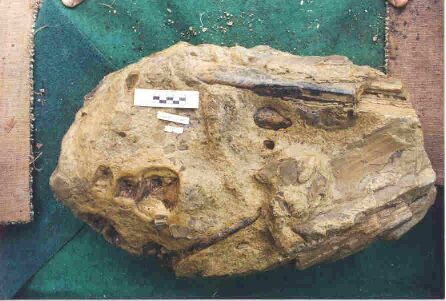
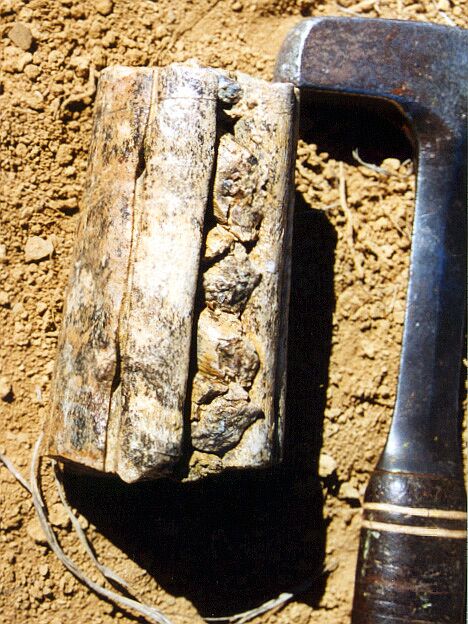
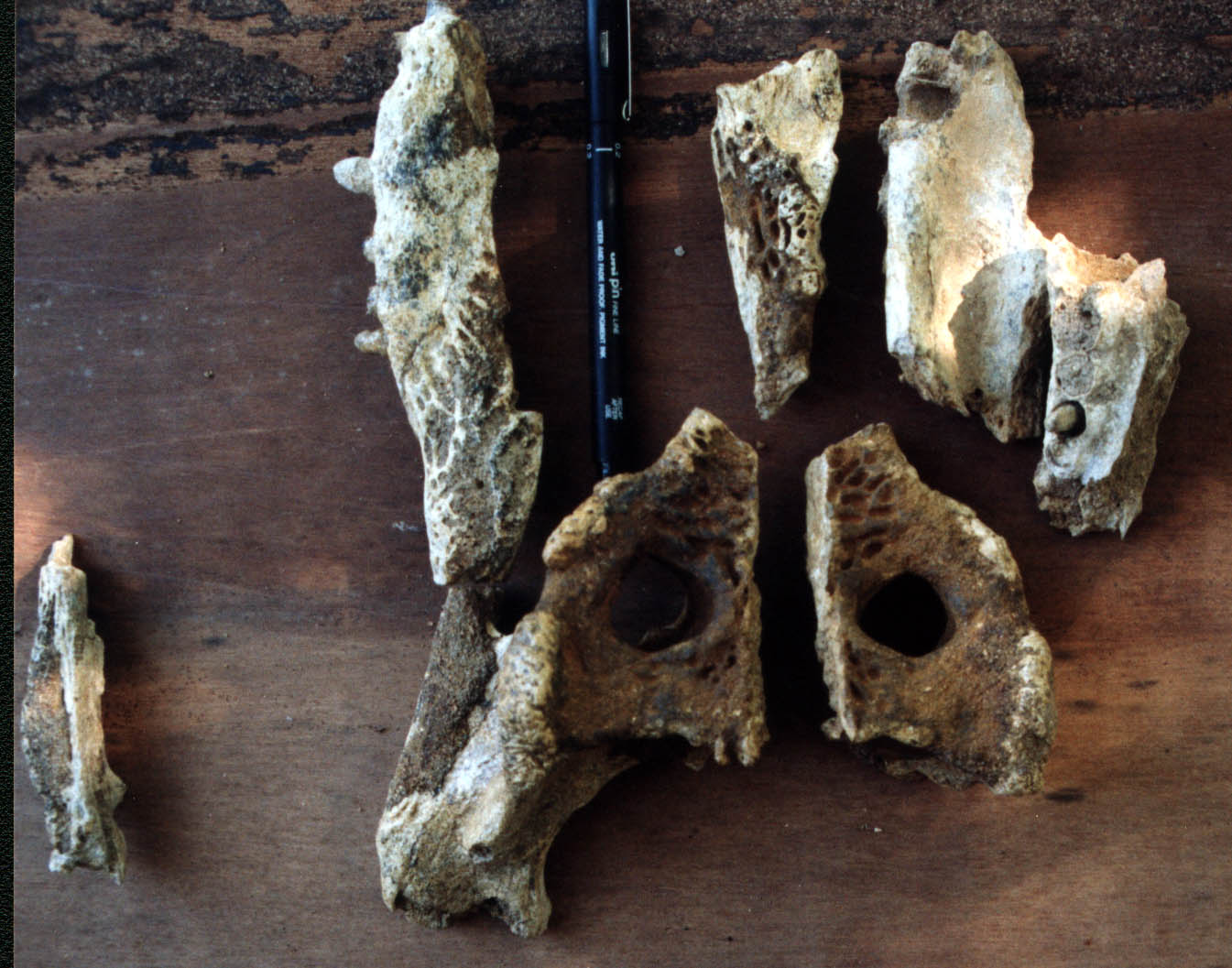
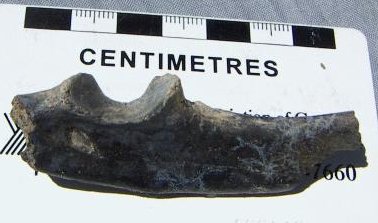
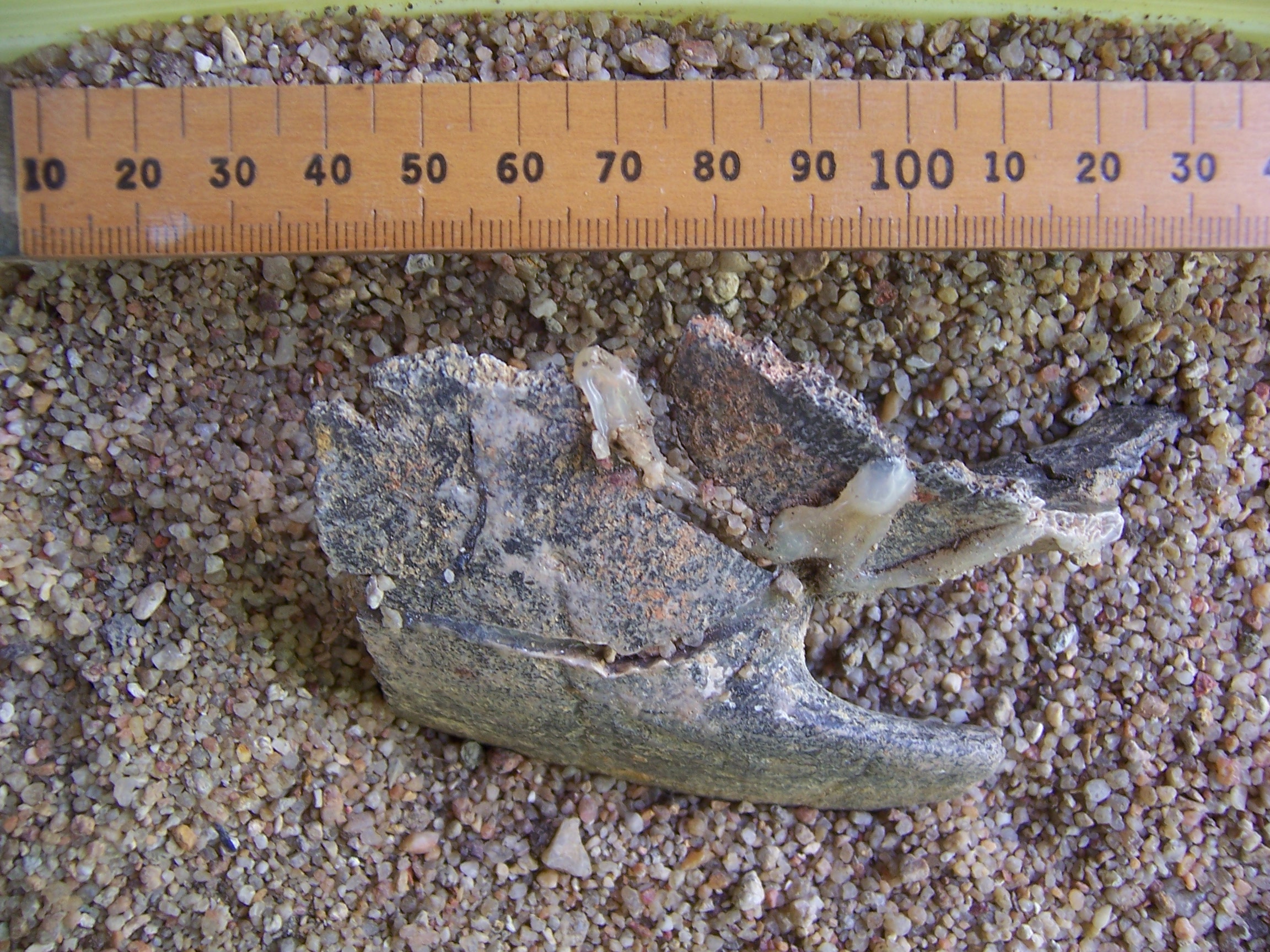
Ichthyosaur Jaw - completes recovery of ichthyosaur 960901 started in 1996
final jaw fragment ichthyosaur 960901 recovered 1996-2000
discovery photo of jaw fragment and tooth
another view of ichthyosaur jaw and tooth fragment.
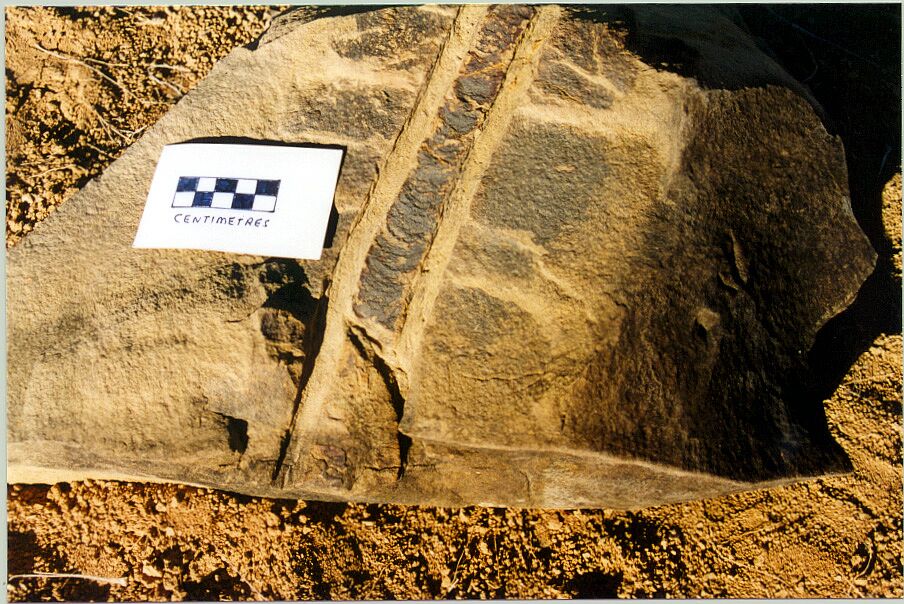
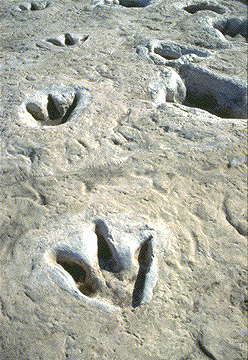
Mystery tracks - crab tracks 110myo - notice curved marks on median
strip where it rested it's body
crab tracks 110 million years old where it backs down into it's burrow
burrow of creature unclassified 110million years old
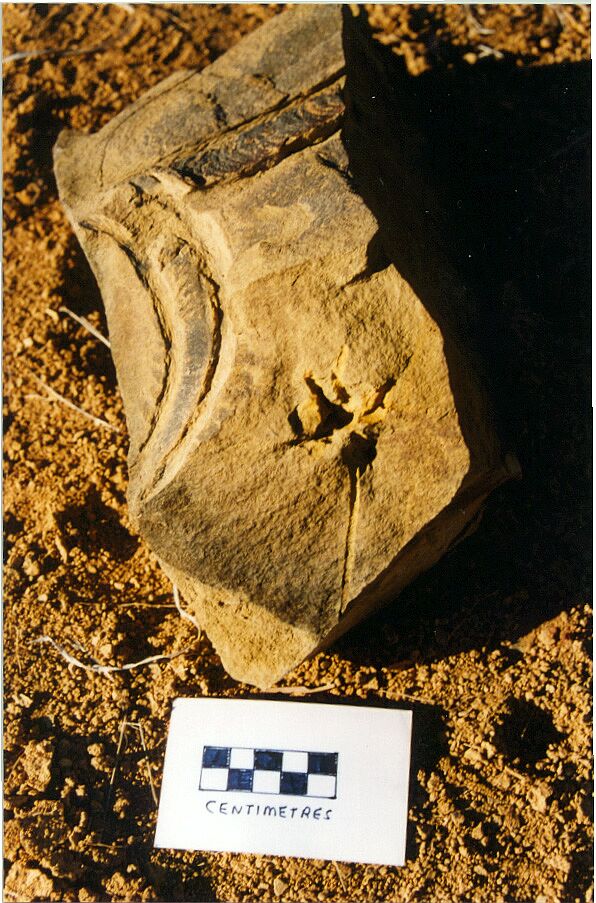
Plesiosaur rib in sandstone
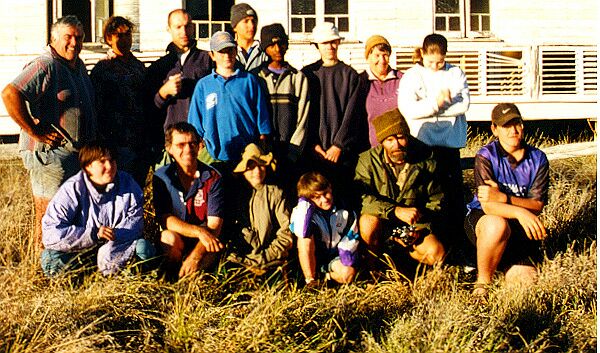
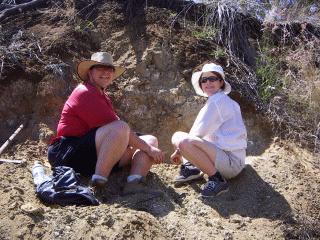
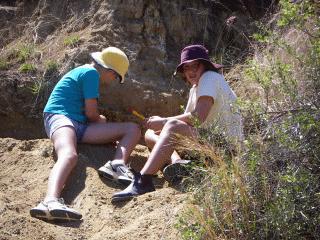
Expedition team 2000
Mad dogs
Late rain hampered this years expedition by dumping large amounts of soil
into the drainage system. As a result we could not follow trains of
fragments up from drainage systems but had to work the less productive
hill sides. As a result it was more difficult for the students on the
expedition to train their eyes into identifying bone fragments. Despite
these initial difficulties we were successful in obtaining some
interesting specimens for the Richmond Museum of Marine Fossils. We were
delighted to find a missing jaw fragment from Ichthyosaur 960901 -
excavated in 1996 and found fragments from a number of other ichthyosaurs
and plesiosaurs which we left in situ for future teams as we were unable
to trace them to source on this occasion. Many thanks to Mr. Scott
Moore-Fay who flew over from England to join our team - his enthusiasm and
insights were greatly valued by all. Thanks to the Priority Country Area
Program on behalf of the Commonwealth Government of Australia for a grant
to subsidise our diesel fuel costs.
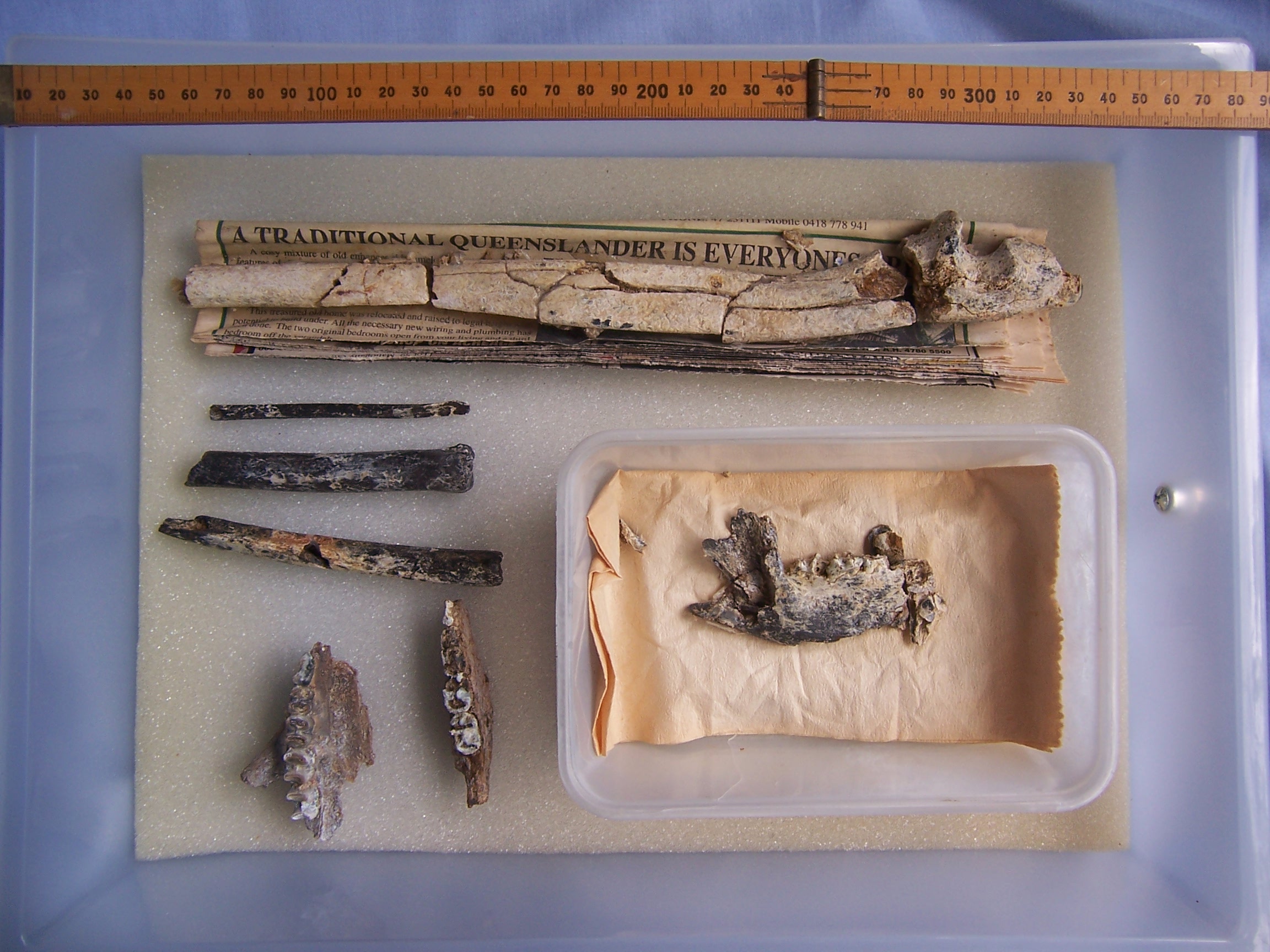
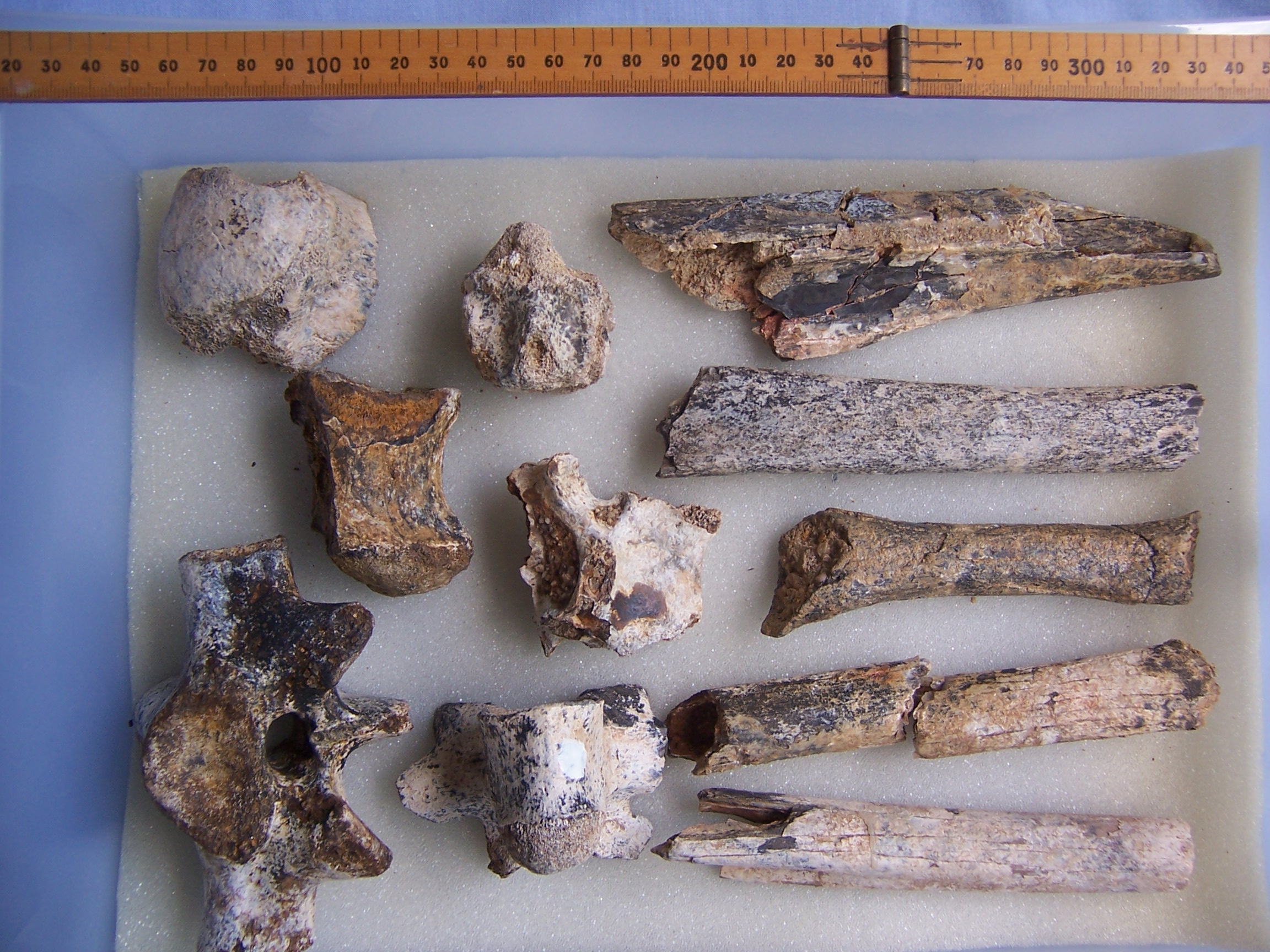
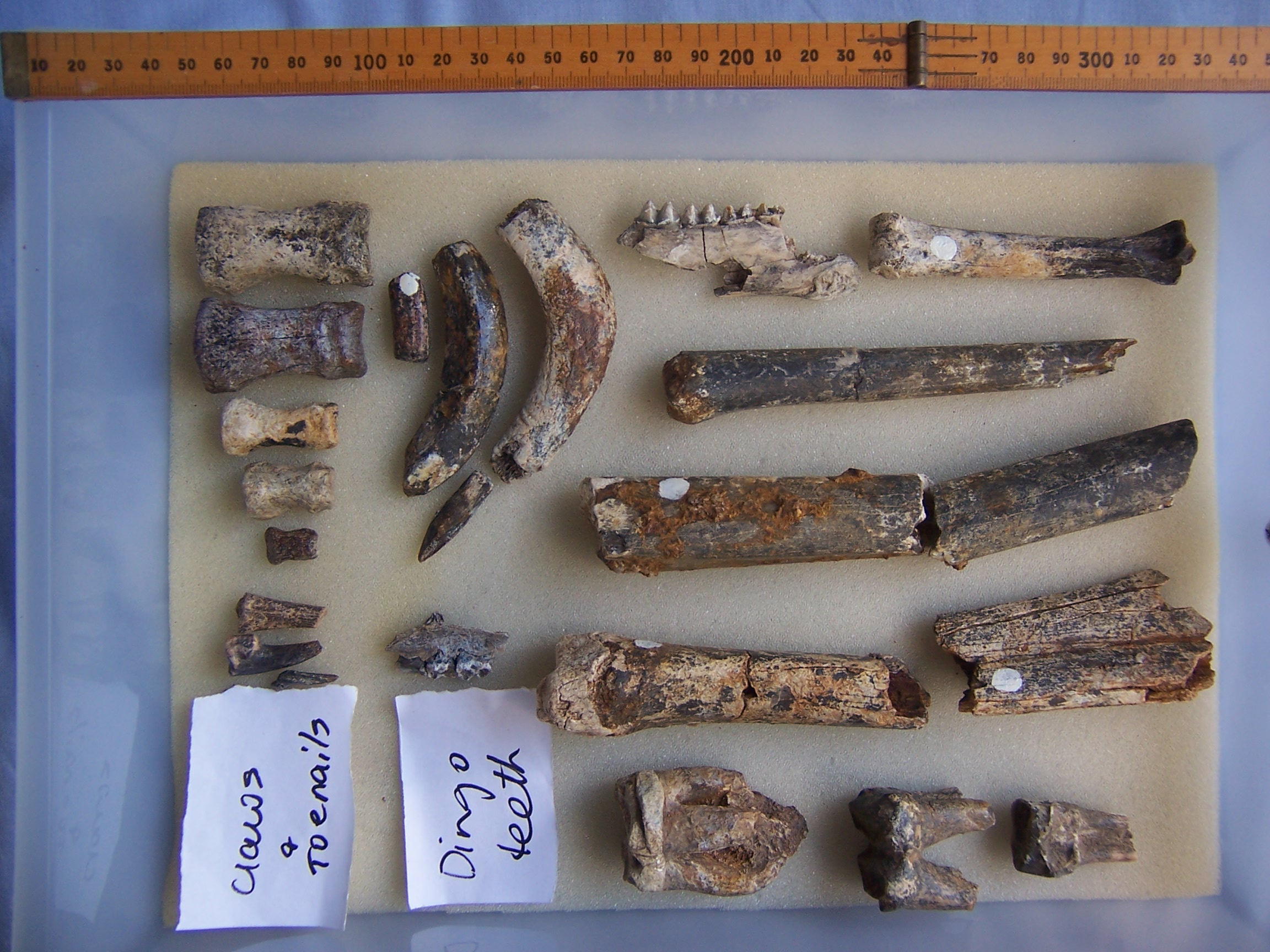
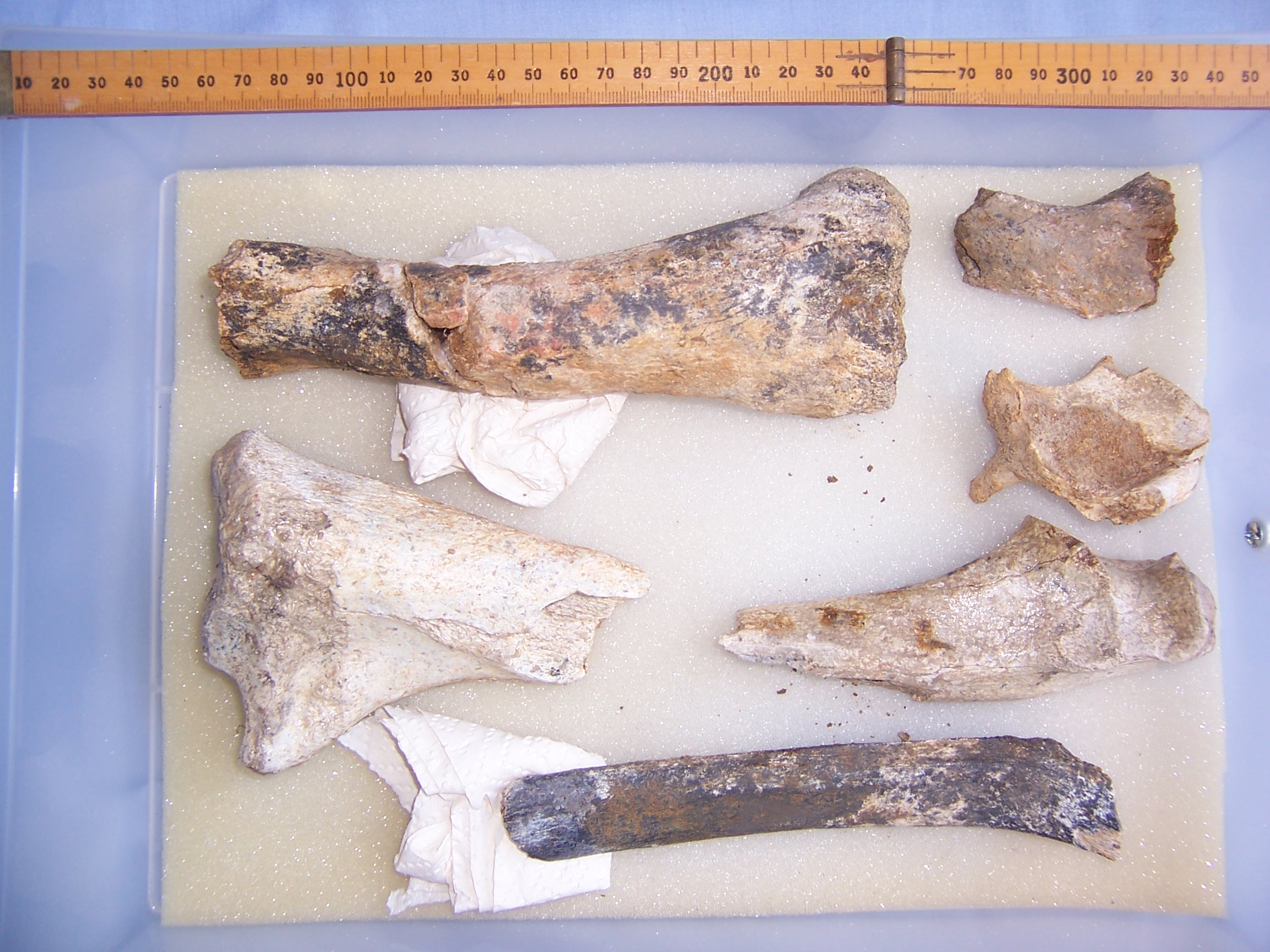
EXPEDITION MEGAFAUNA / CROCODILES 4.2MYO
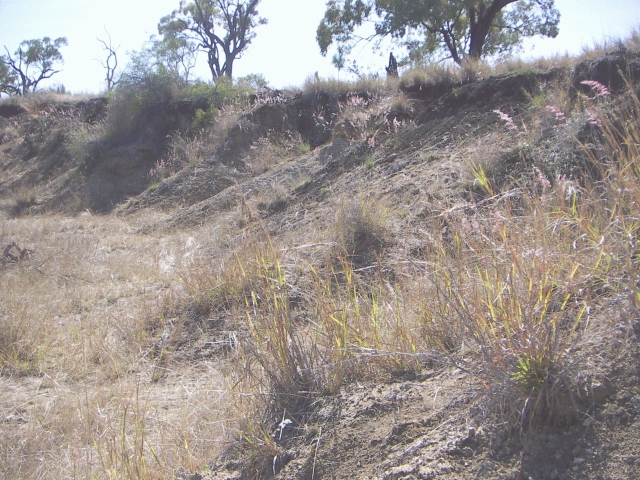
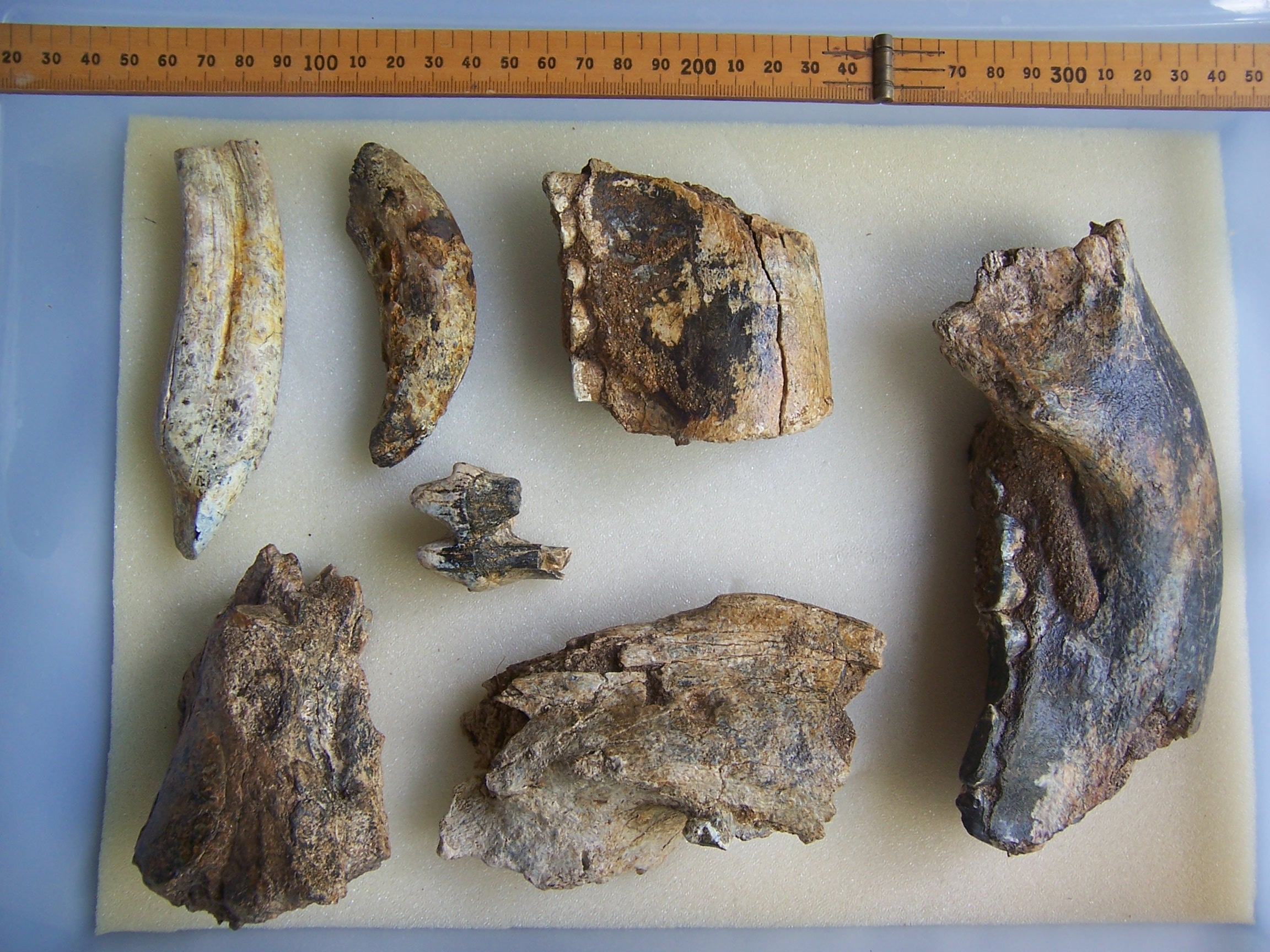
A 4.2 million year old spring and fresh water pool - megafauna,
giant marsupials, turtles, crocodiles:
Far North Queensland Fossil Heritage Expedition 1999
- a new bullock size diprotodontid
New Diprotodontid 990701 euowenia coreis
the second specimen only of euowenia coreis
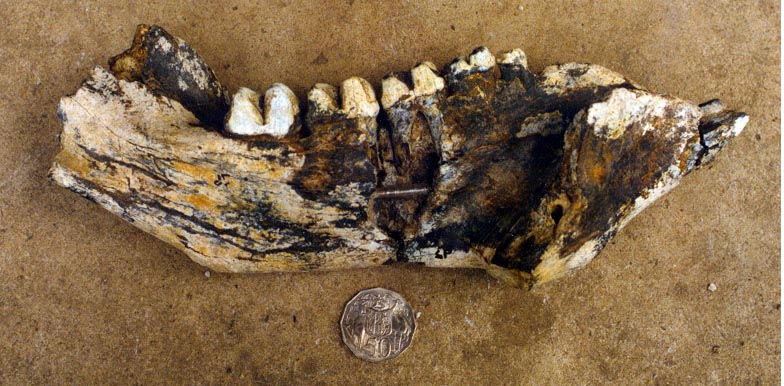
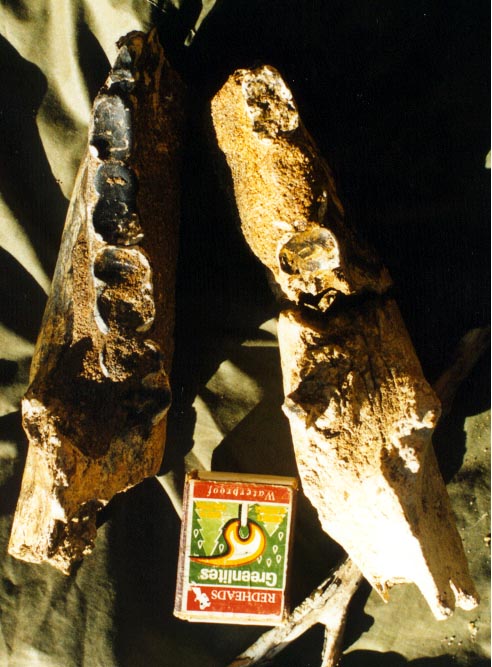
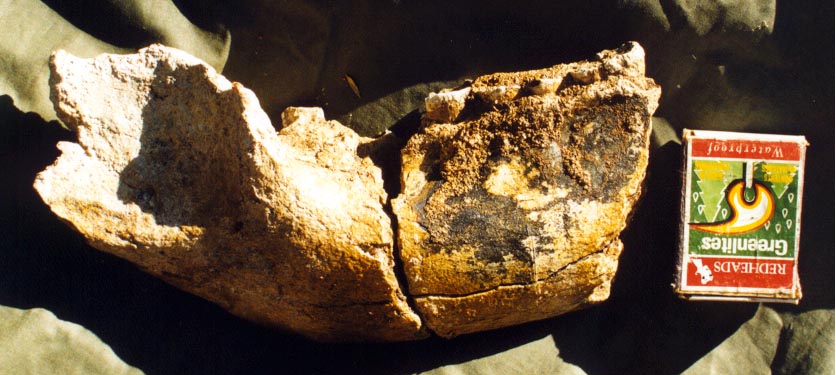
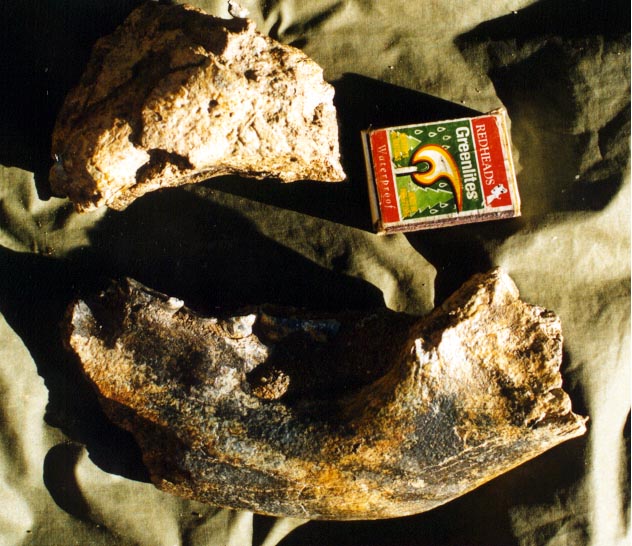
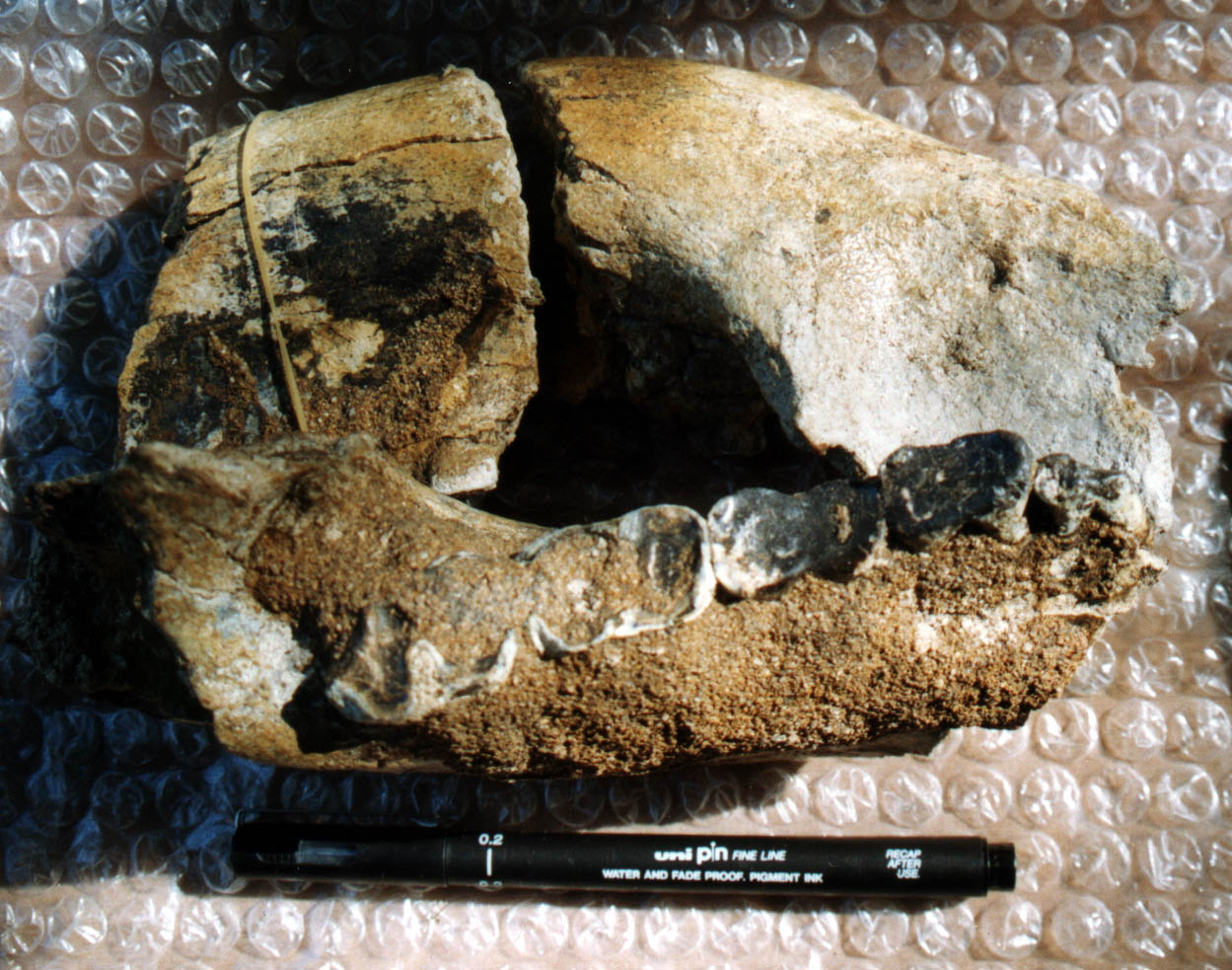
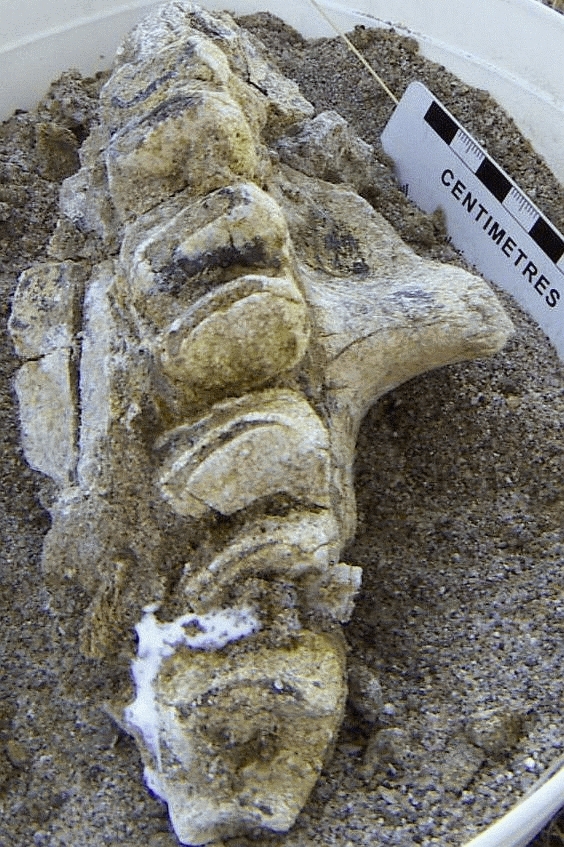
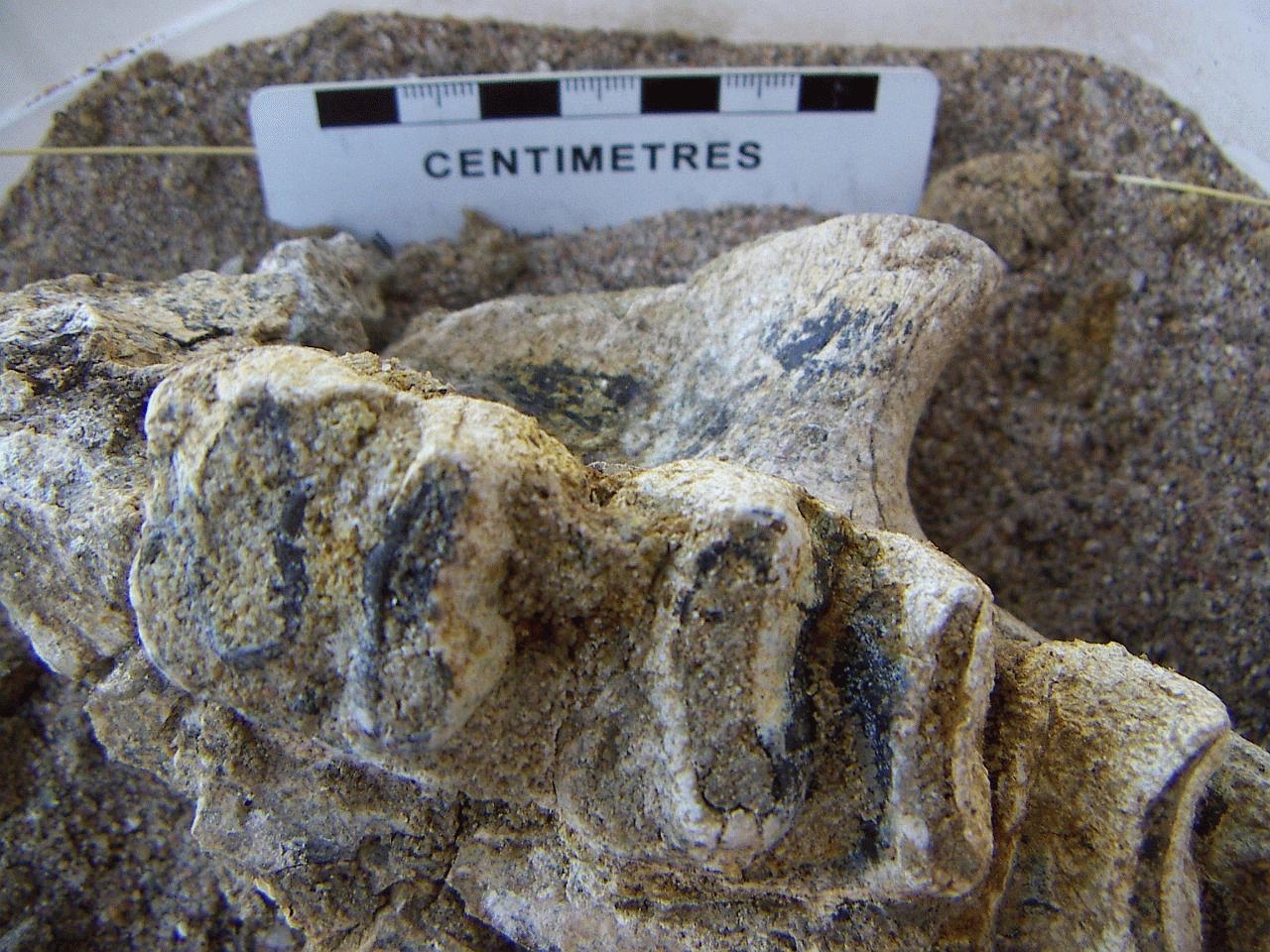
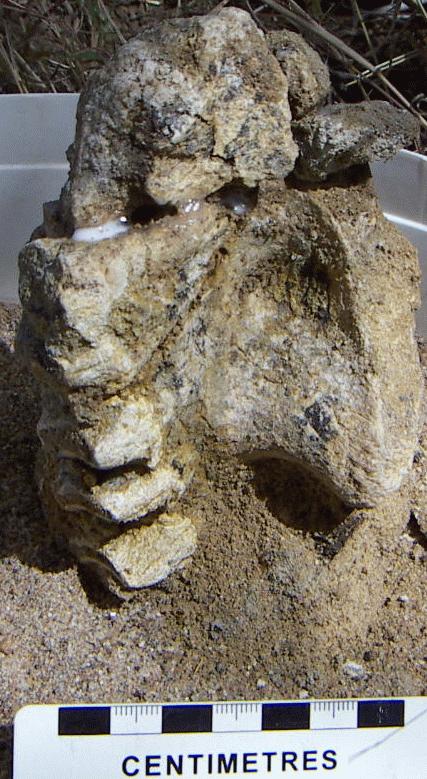
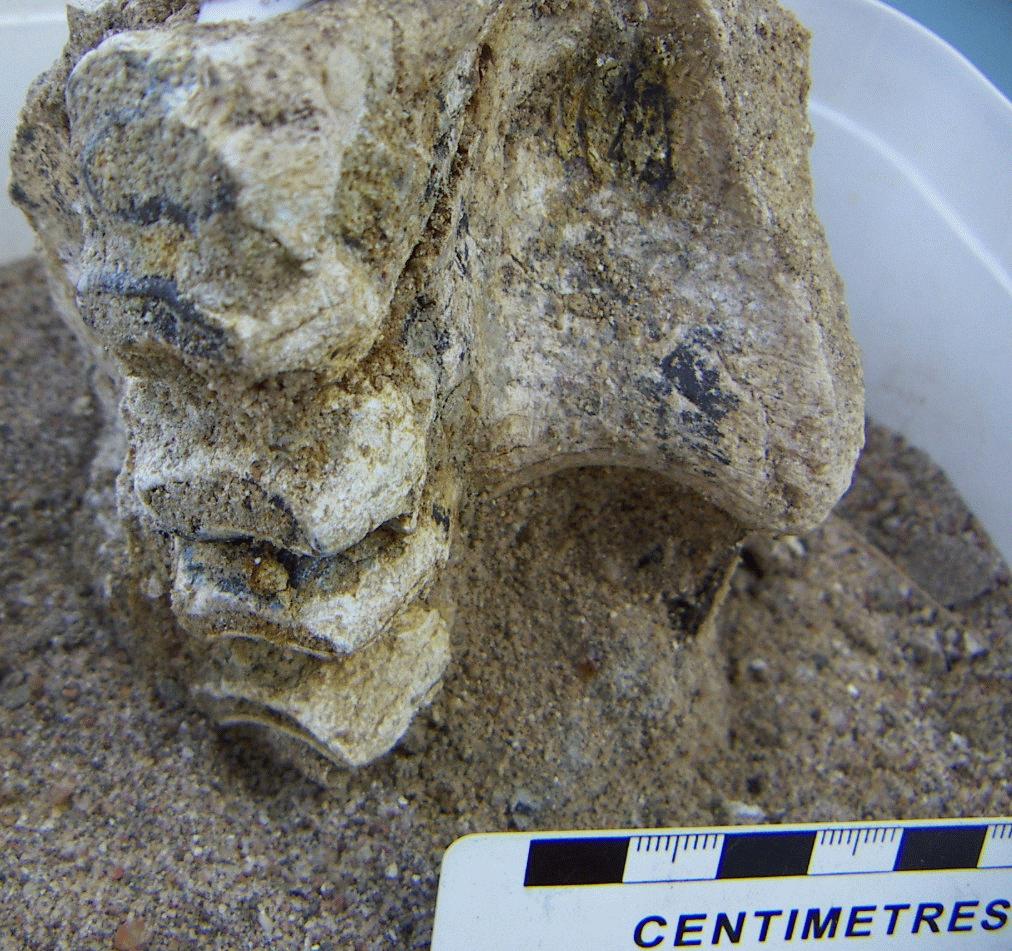
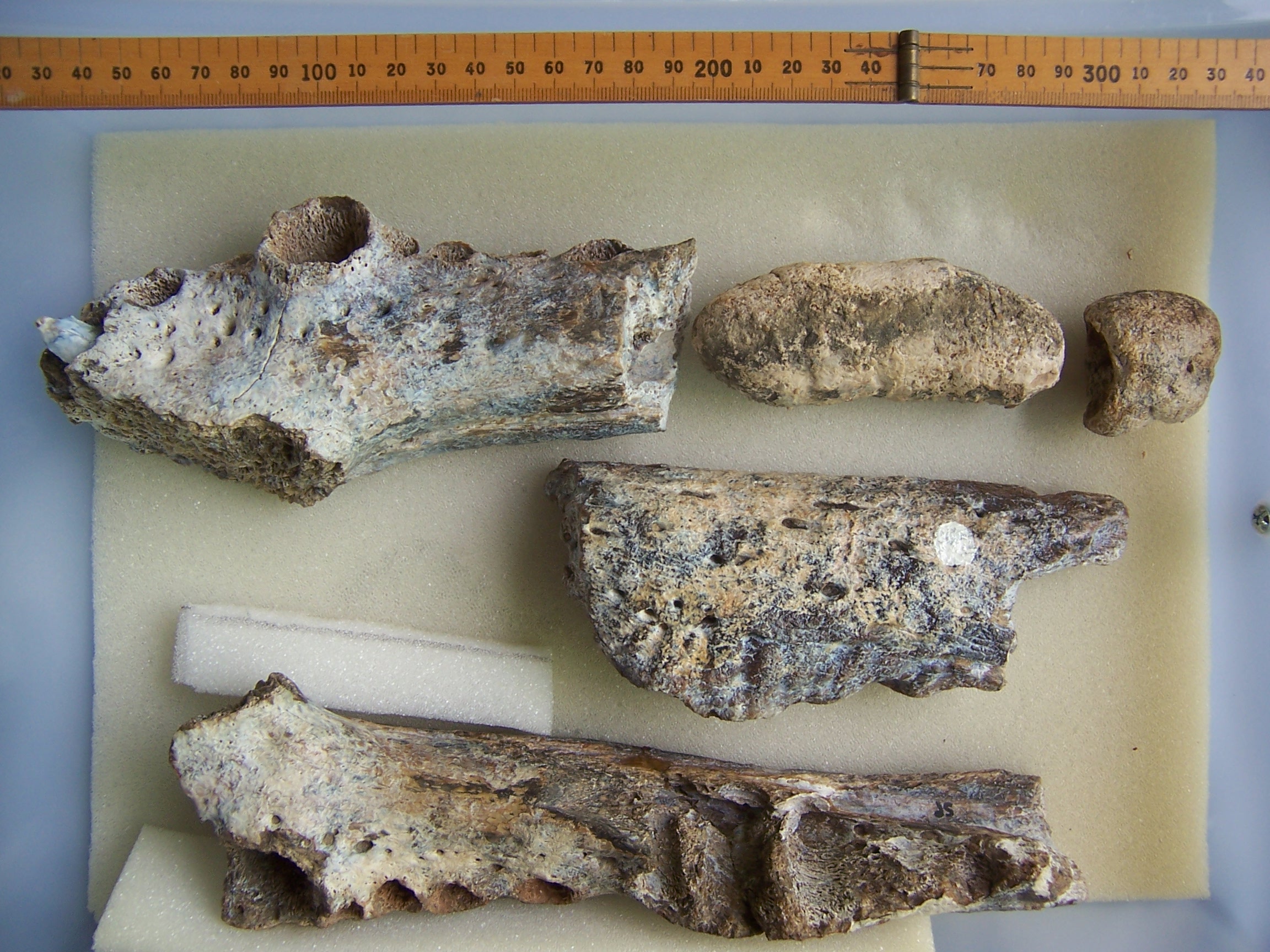
lower jaw view 1 of euowenia
lower jaw view 2 of euowenia
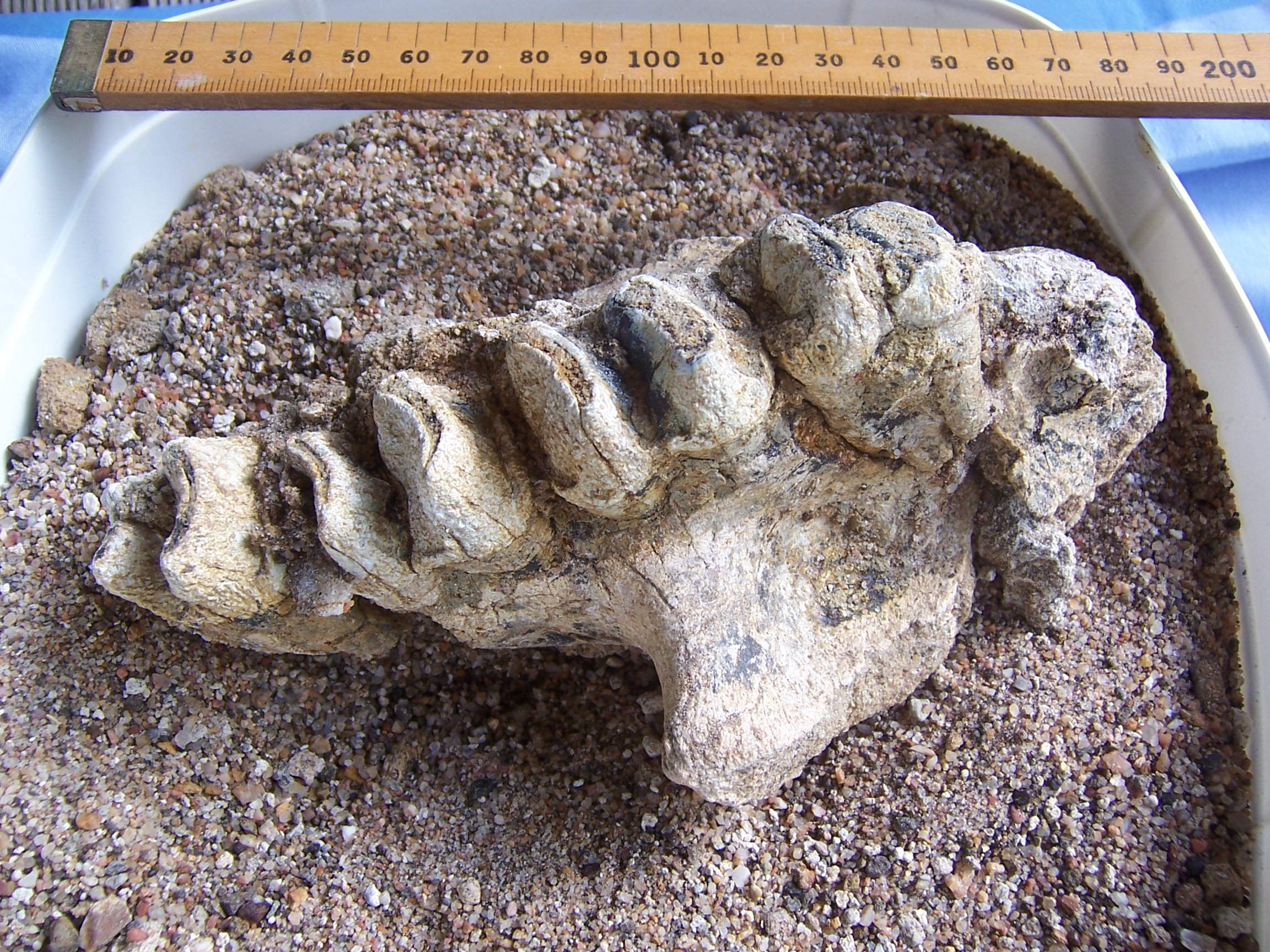
- note excessive tooth wear of old individual
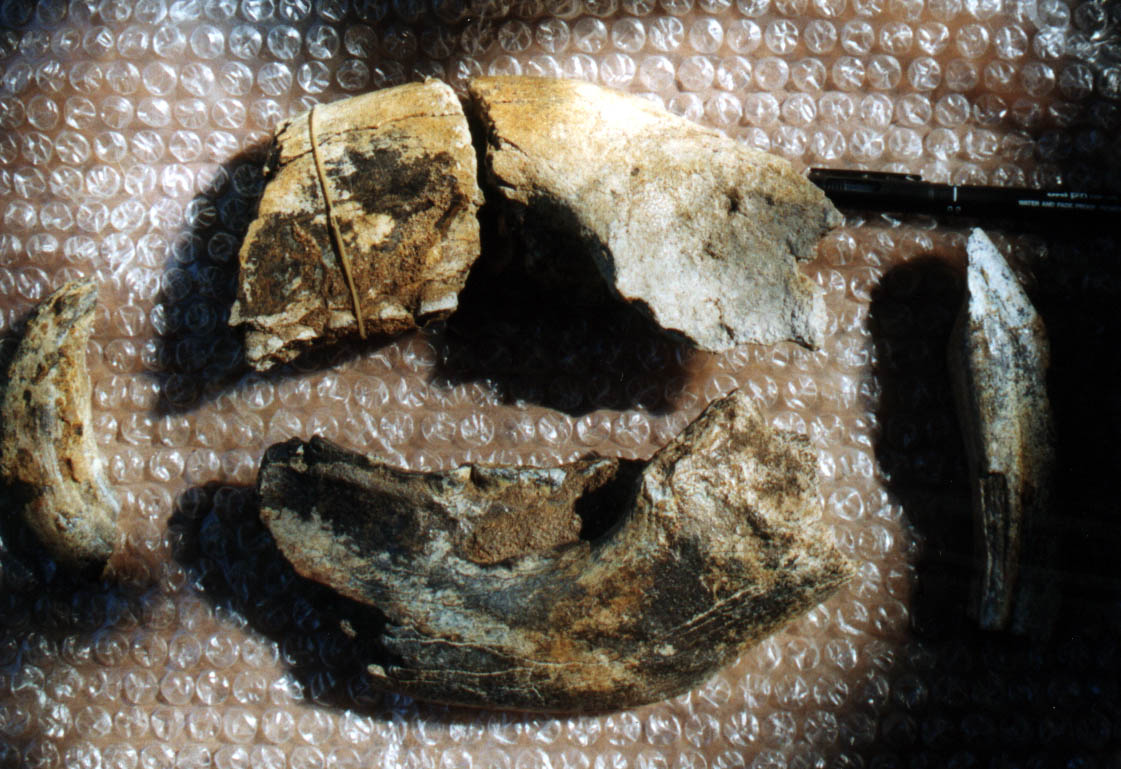
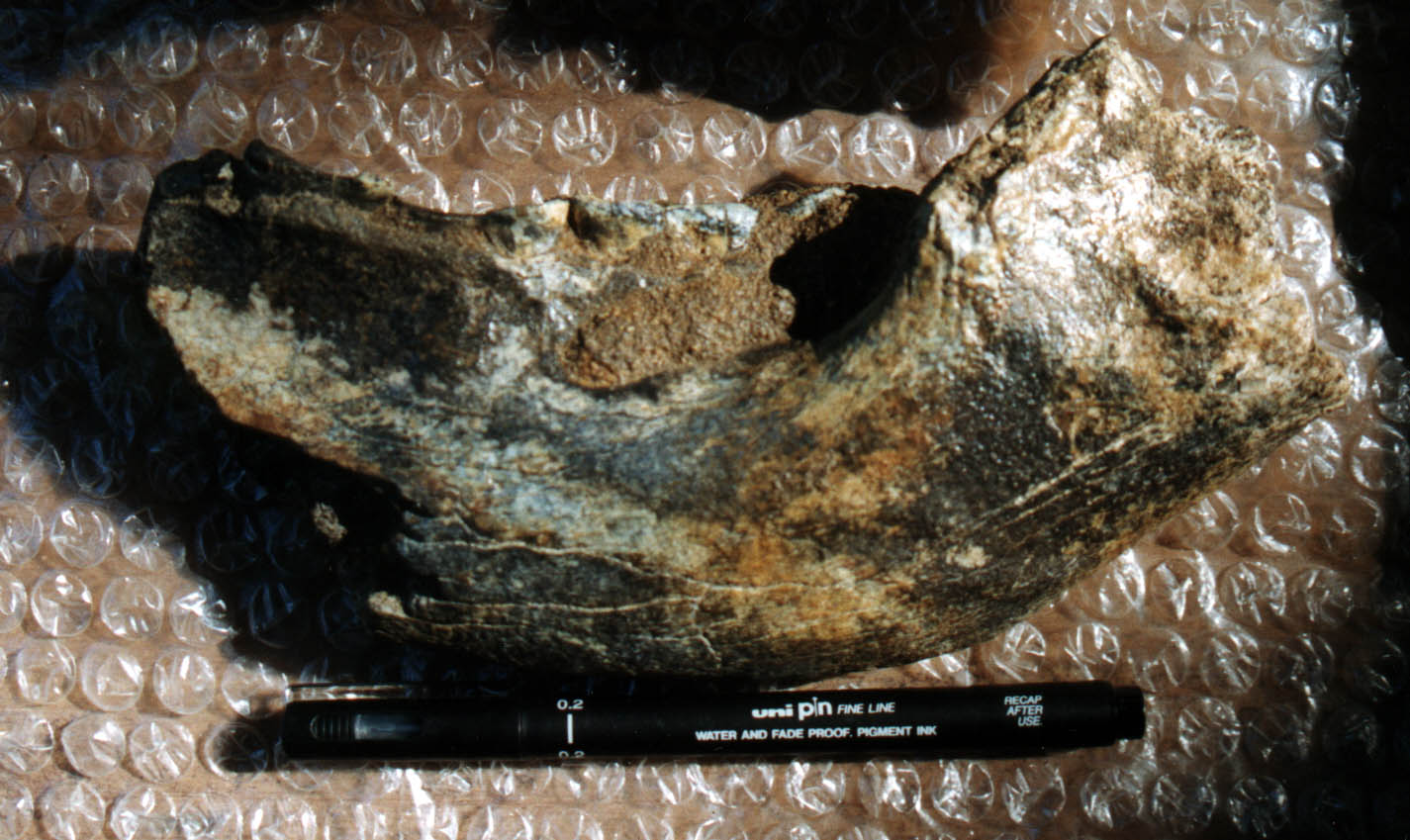
lower jaw view 3 of euowenia
lower jaw view 4 of euowenia
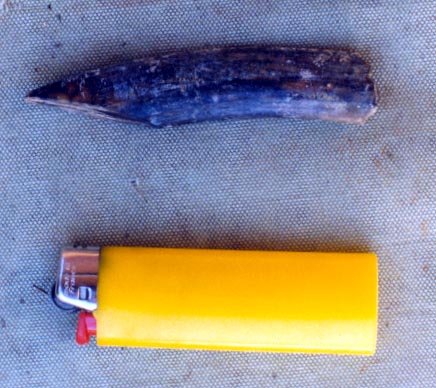
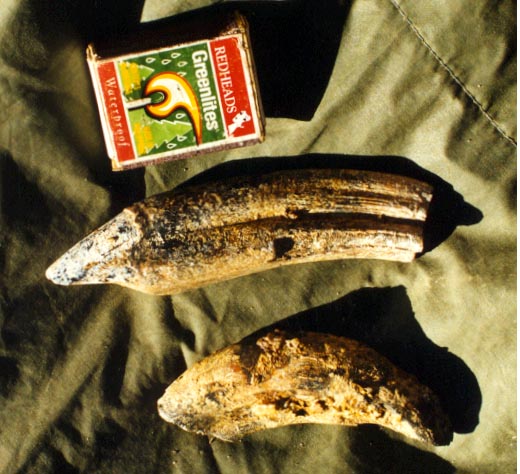
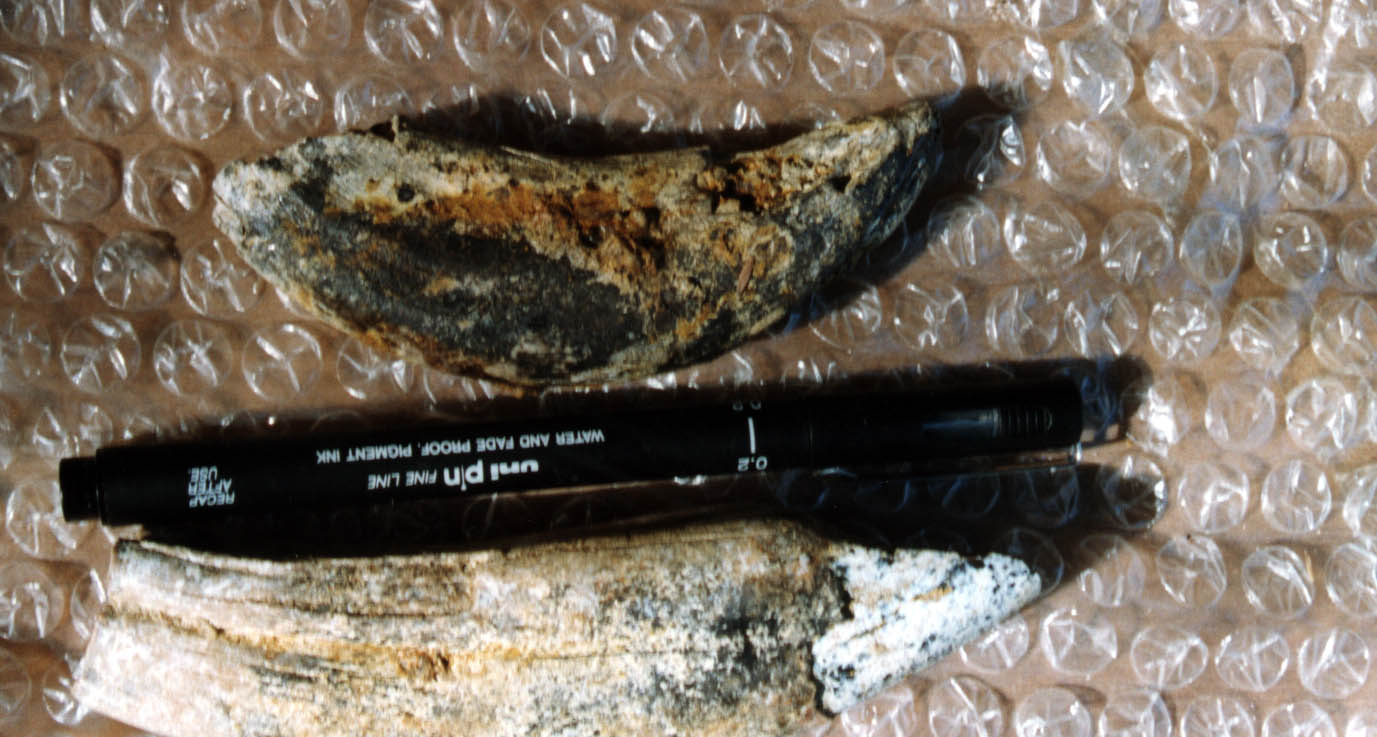
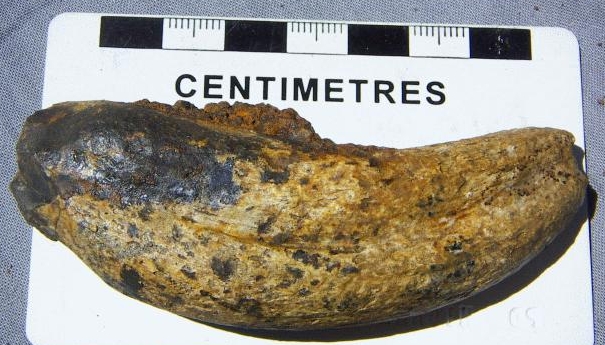
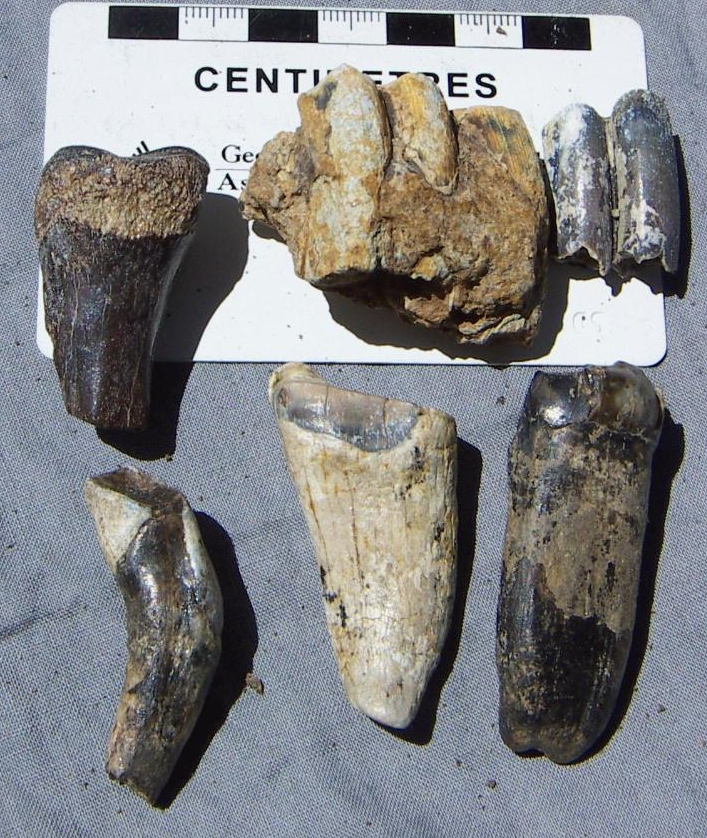
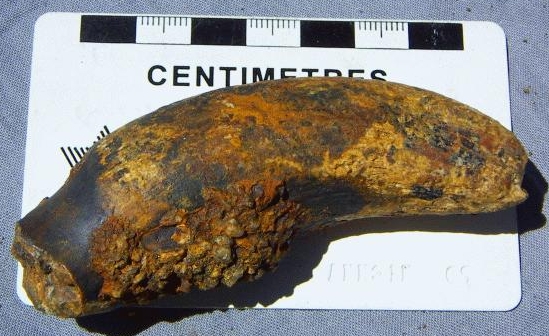
tusk of diprotodontid
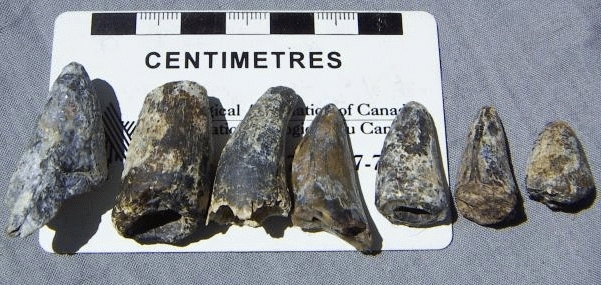
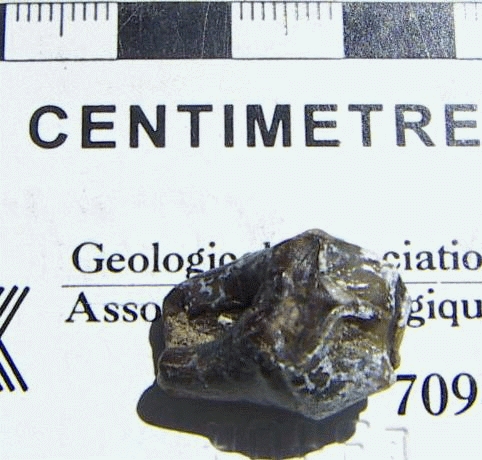
teeth as yet unclassified
tooth detail
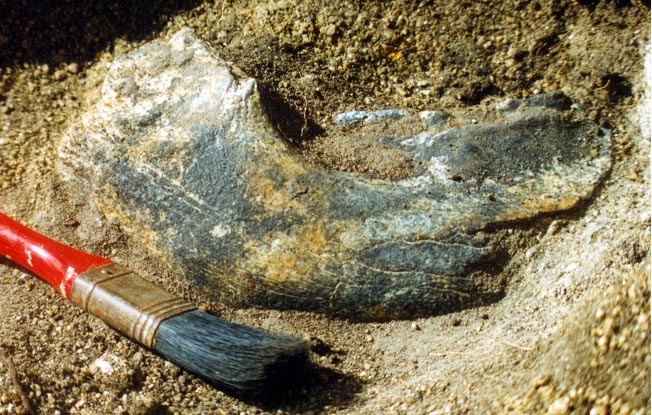
removing the jawbone from its matrix
1998 expedition discoveries
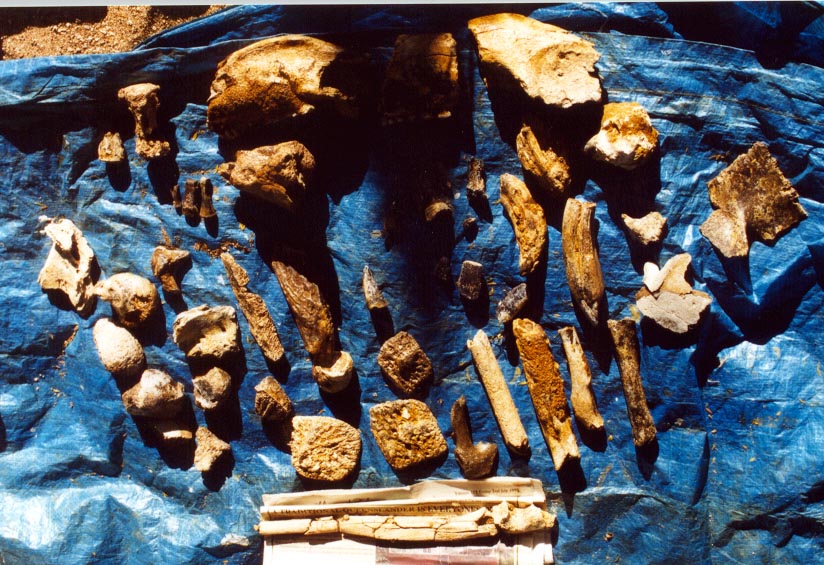
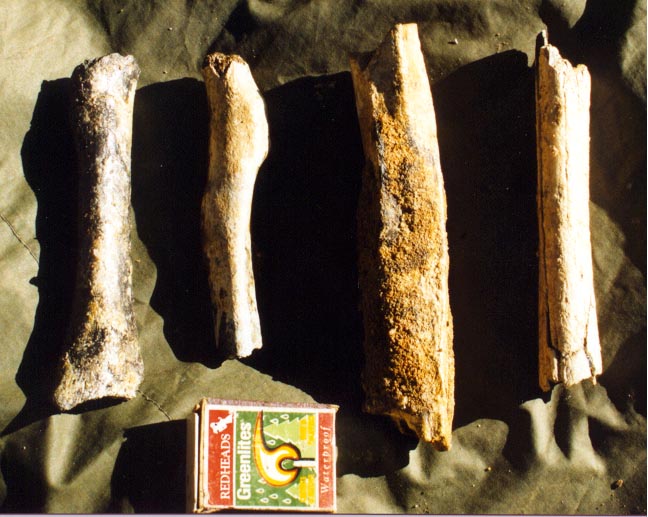
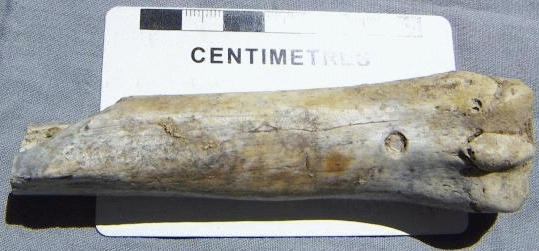
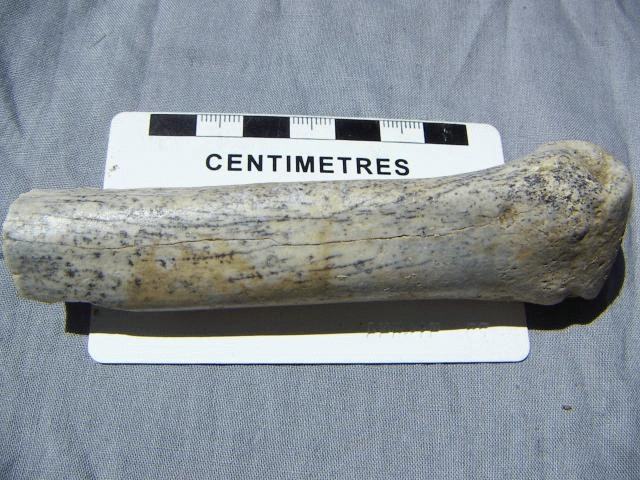
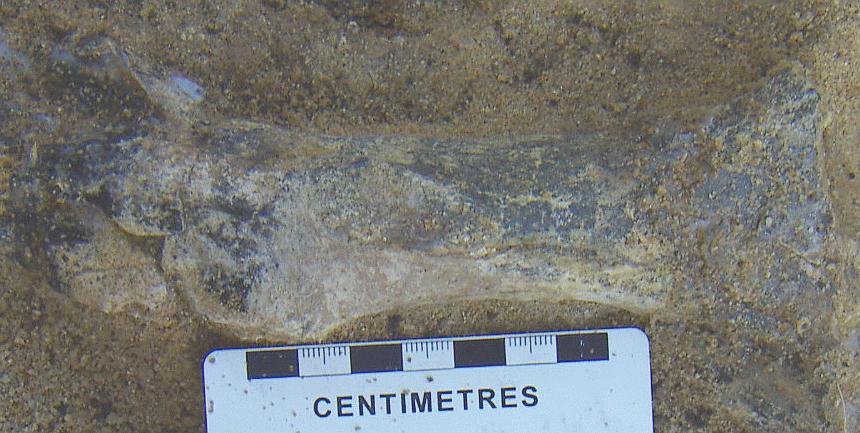
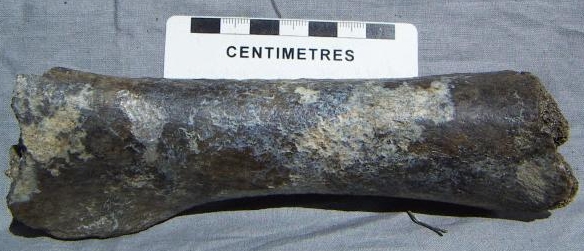
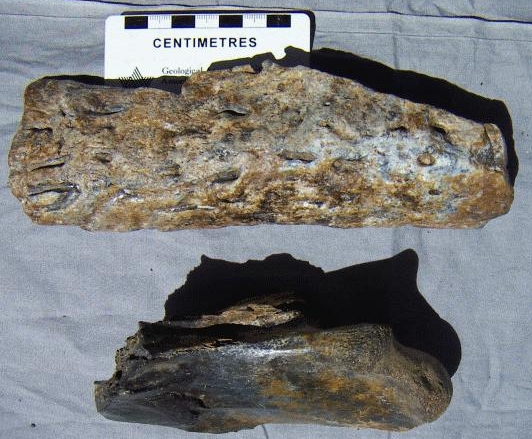
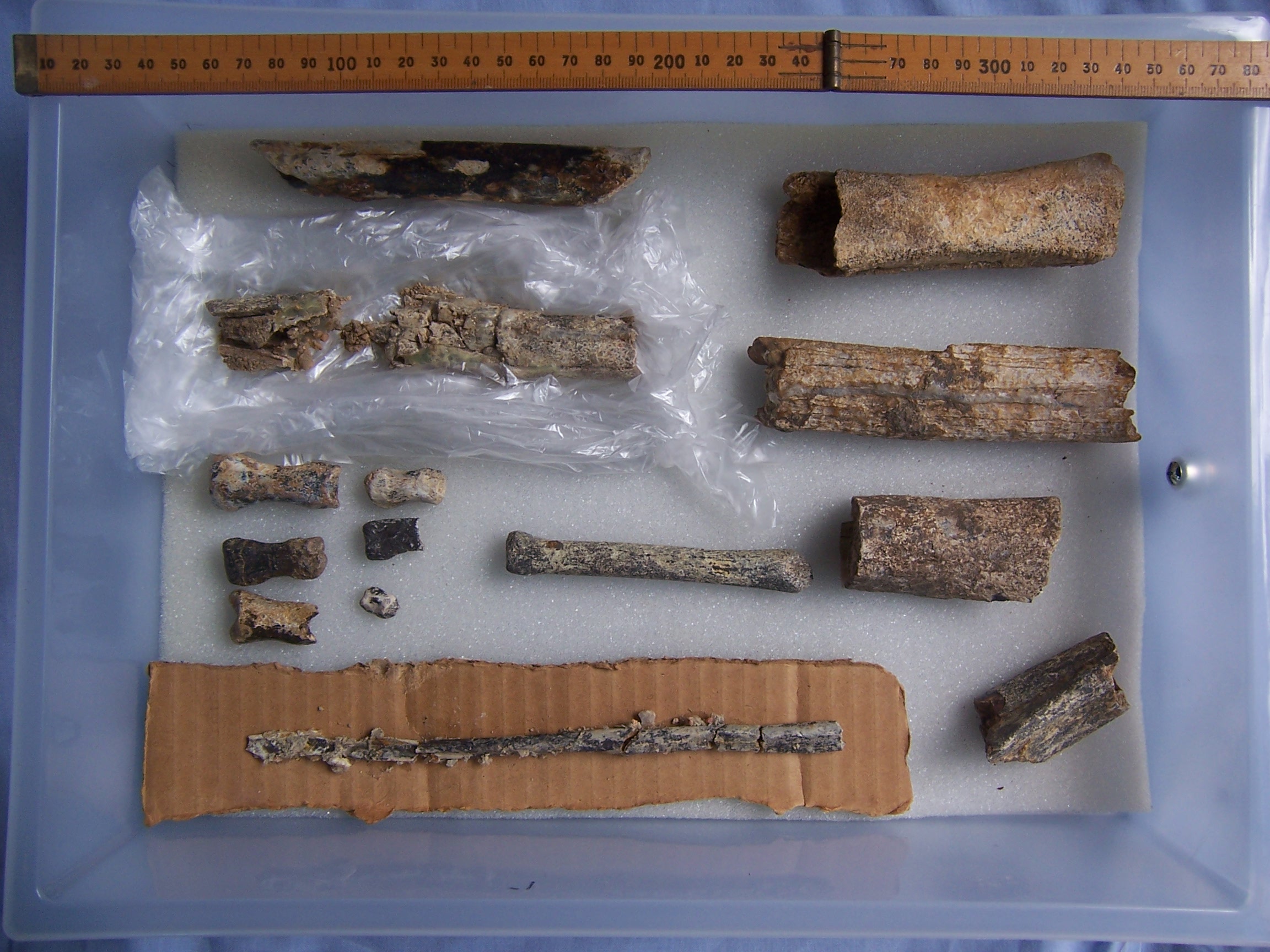
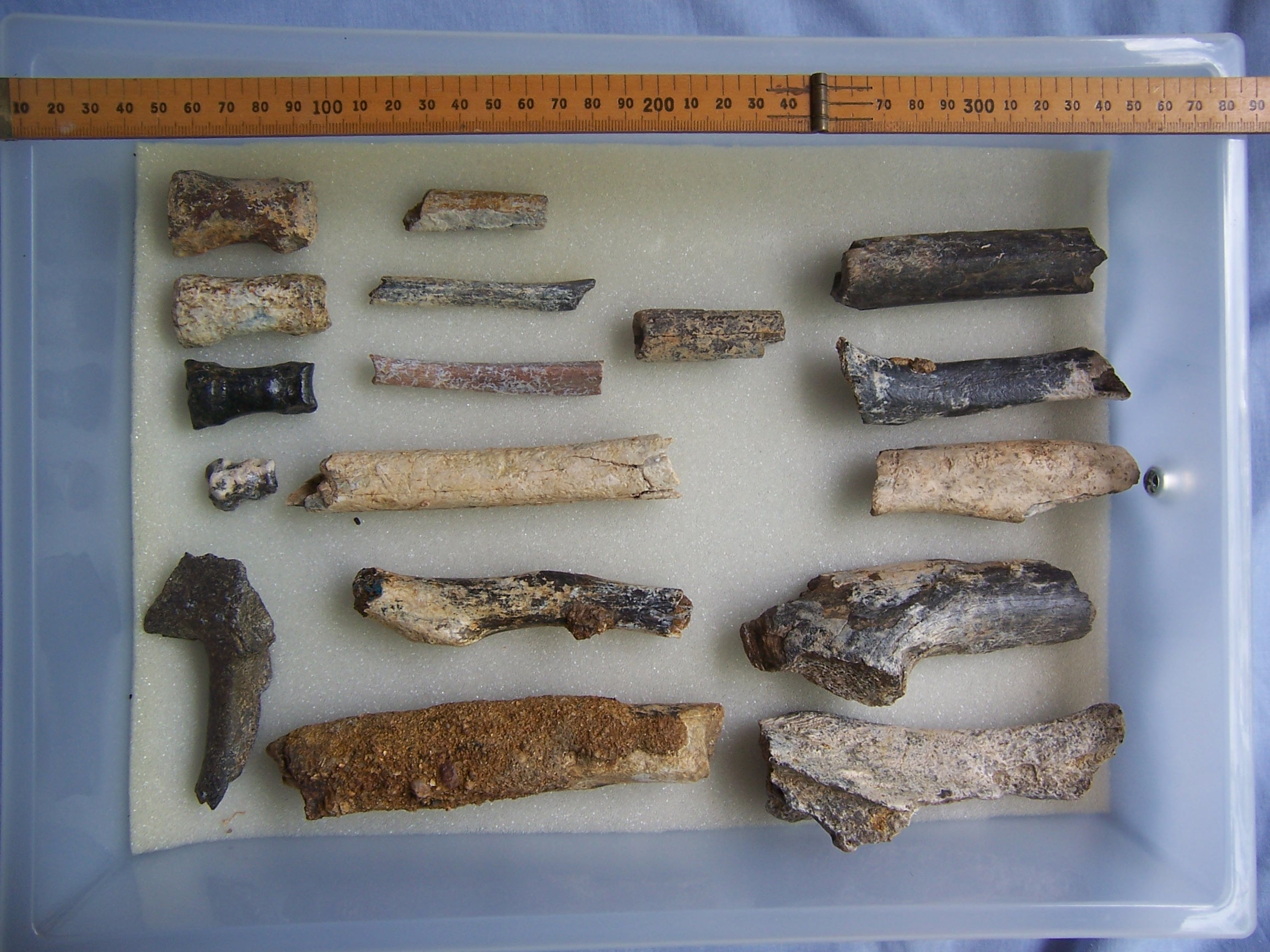
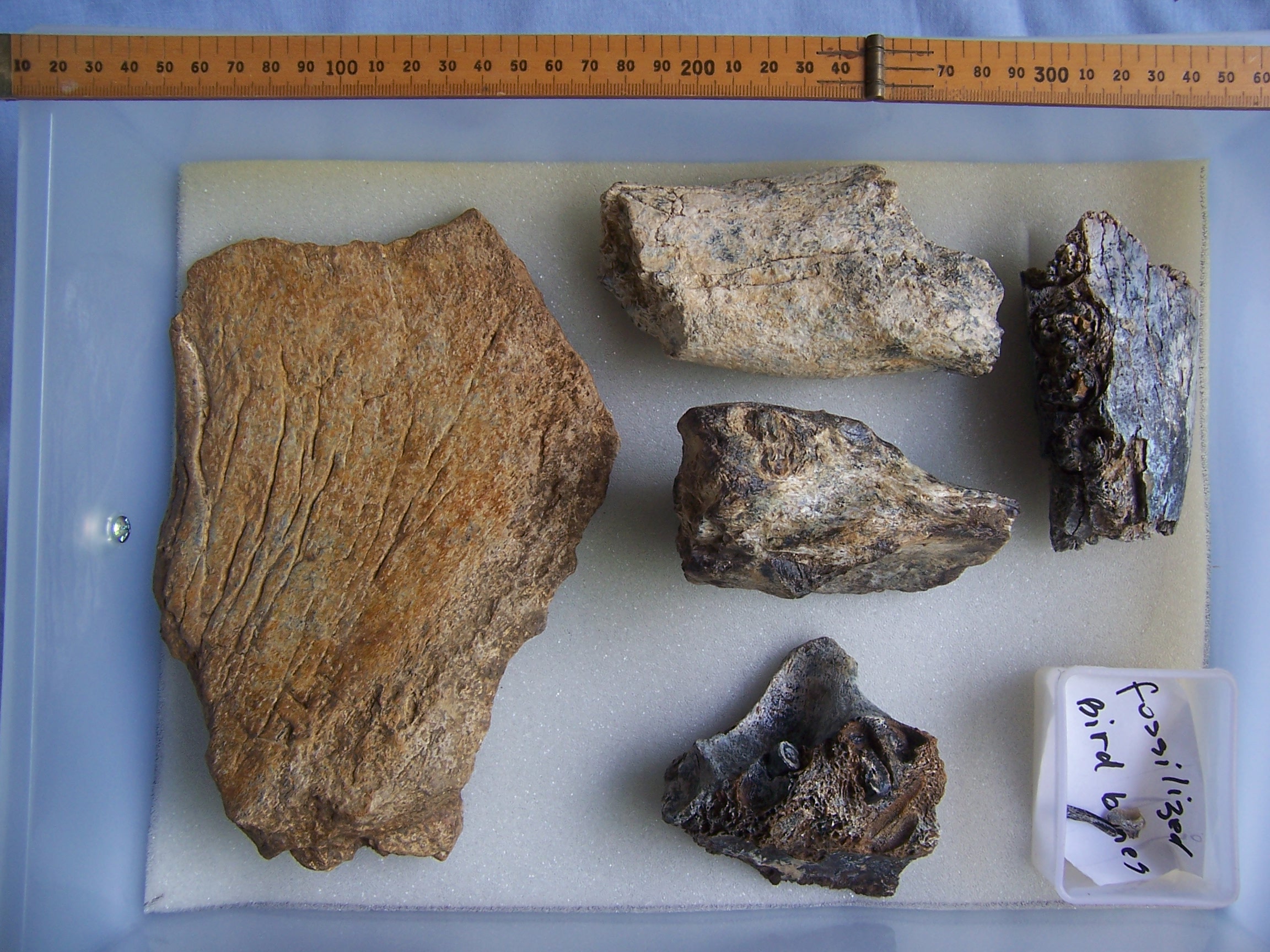
marsupial limb bone fragments
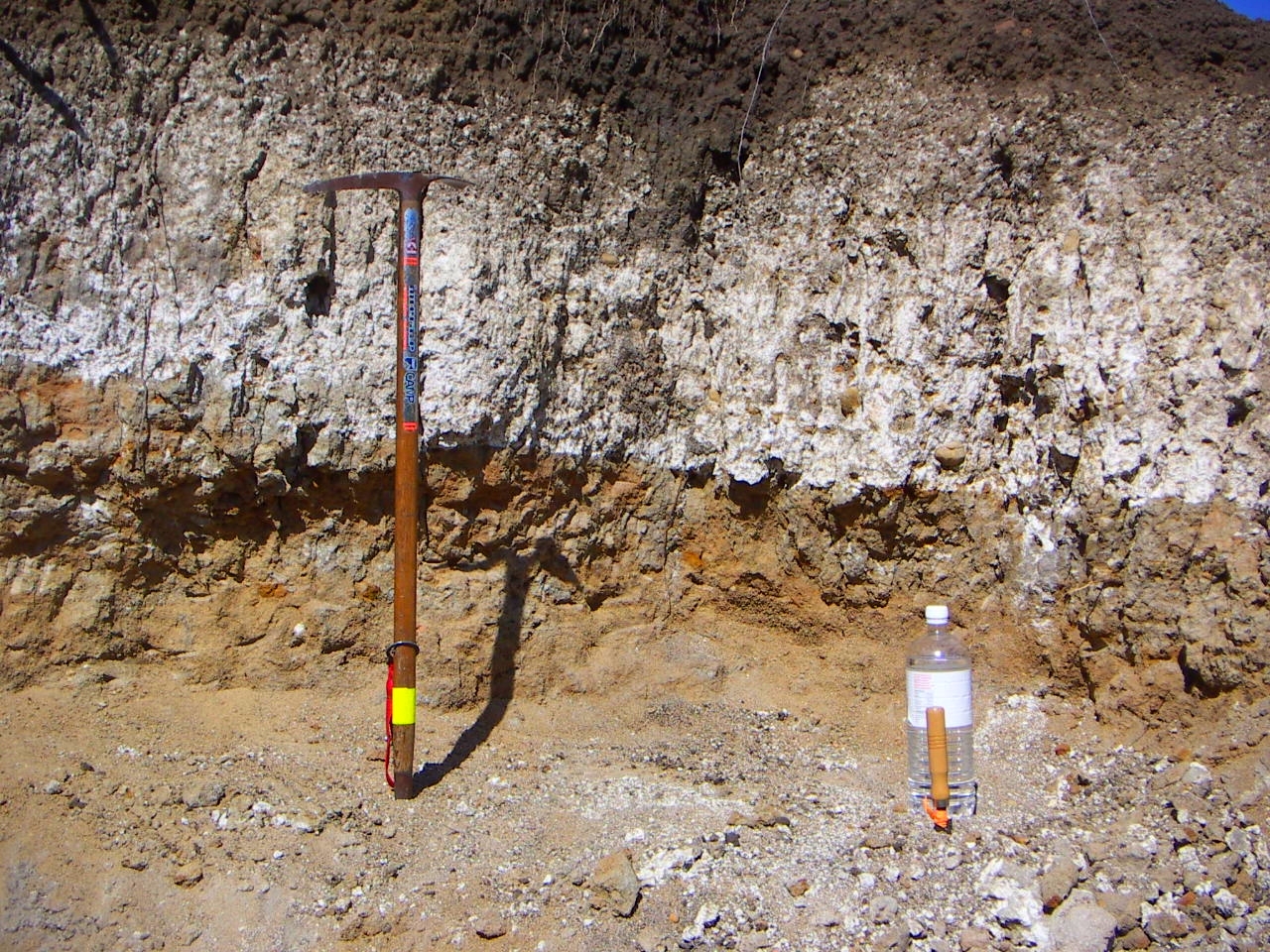
The Far North Queensland Fossil Heritage Expedition 1999 centered on a 4.2
million year old lake site protected by a basalt lava flow. We had worked
this site during the prolonged drought 1992-1995 then decided to
leave if for a few wet seasons to give time for more material to wash into
the drainage and to clear the drainage system of wind blown soil and dust
from the last drought.. The site has resulted in the discovery of a number
of new species and a particularly interesting crocodilian.
The lake or plunge pool was fed by a spring that still exists and
contained two species of crocodile and a couple of species of turtle.
Surrounding the lake was thick forest full of bullock size marsupial
browsers and grazers, possums similar to those found today, giant
flat faced-kangaroos, wallabies, large flightless birds, pythons and
koala like creatures. The bones of creatures that fell into the pool or
were taken by crocodiles flushed down stream in the annual flooding and
rapidly buried by the sand. The area was capped by a basalt lava
flow which as it weathered provided silica to leave the bones; though
shattered, and scattered, in remarkably good condition.
The drainage system was only partially cleared resulting in difficult
field conditions.
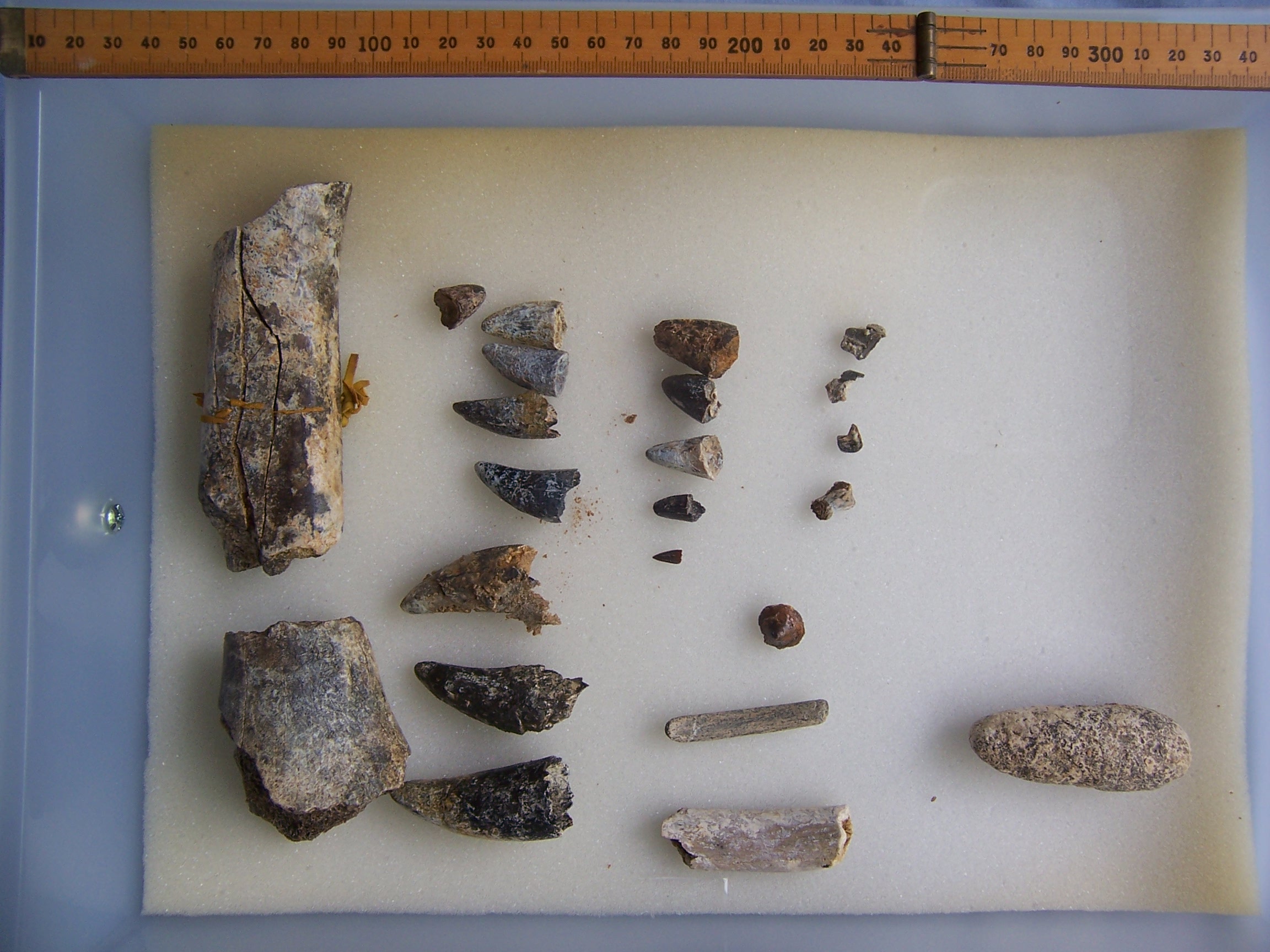
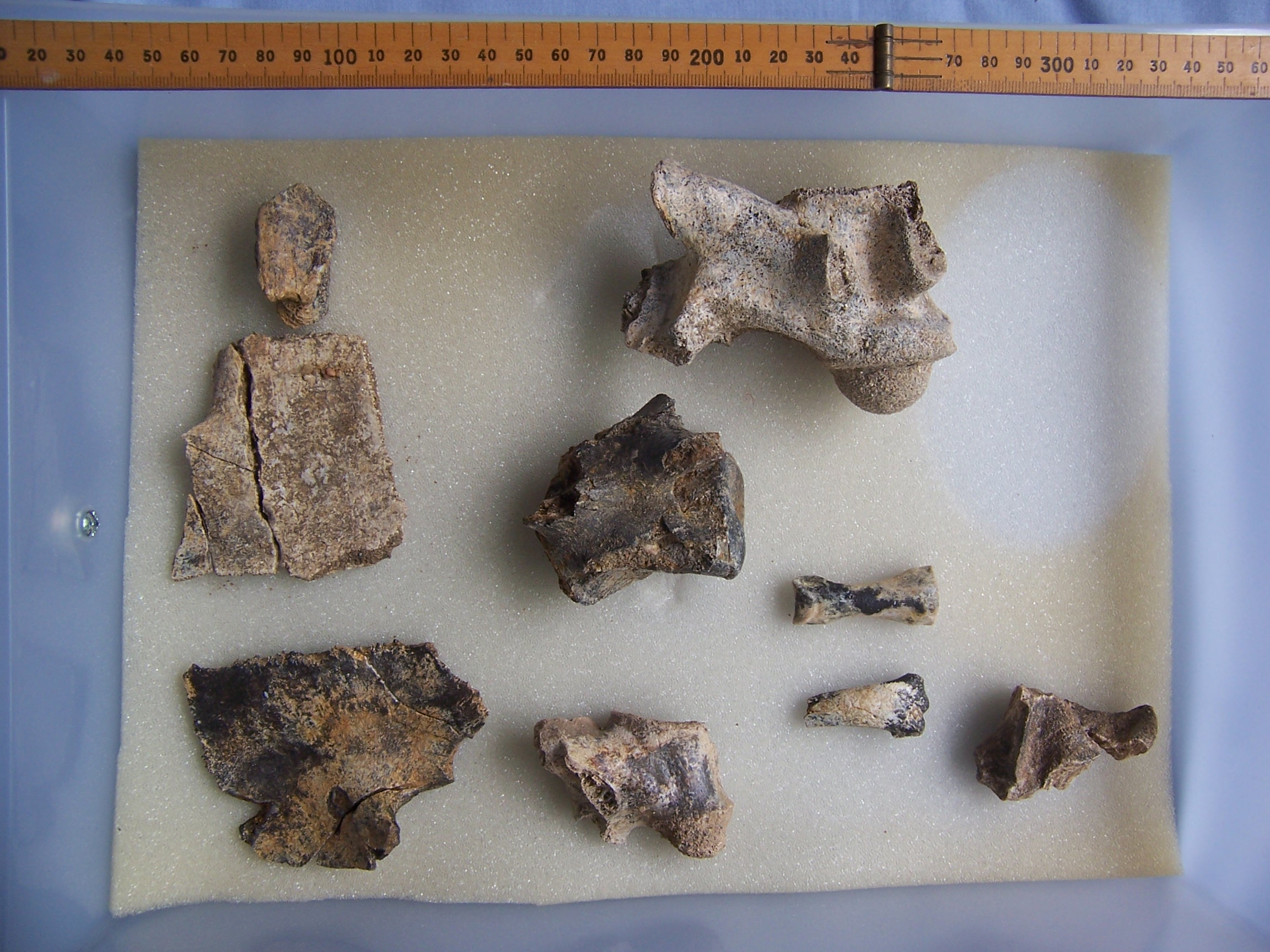
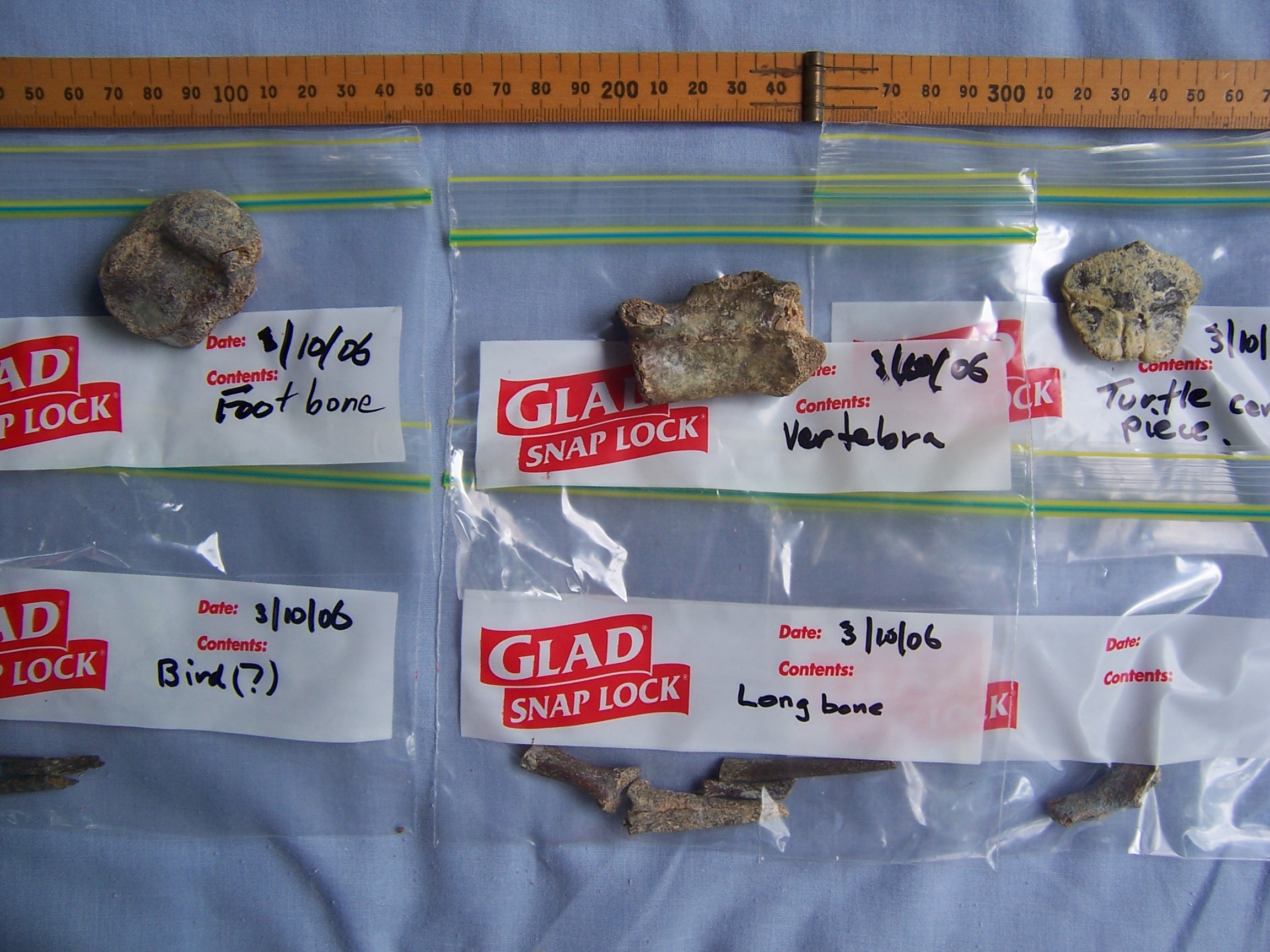
Field identifications identify the lower jaw of a large diprotodontid, a
vertebra of a very large python , a vertebra of a large flightless bird
and a possible beak fragment among a range of single teeth and bones.
Dig 2001 - finding new study locations
- sorry we have no photos - we found one diprotodontid jaw, an elderly
individual, in a different drainage but spent most of the time looking for
new sites to look at in detail in 2002
Dig 2002 - 4.2 million year old megafauna
- giant marsupials at an old spring site, the number of individuals with
well worn teeth at this site is quite perplexing
Diprotodontid possibly euowenia, an old individual
Diprotodontid tusks and jaw
detail showing exceptional tooth wear
tusk detail
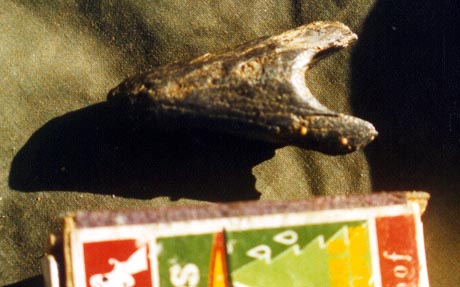
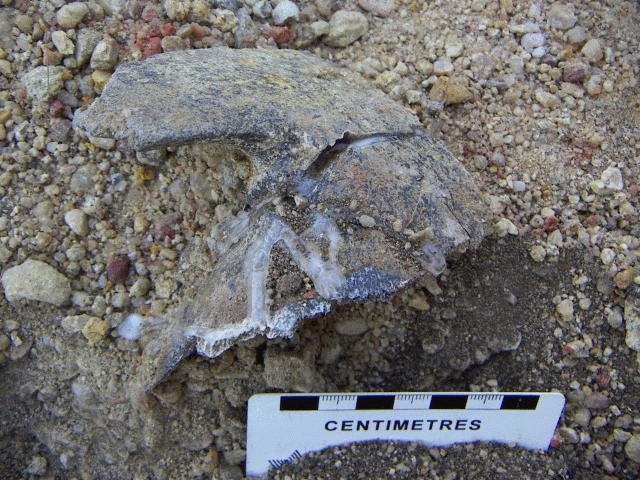
reptilian jaw
Dig 2003 images lost
Dig 2006 - Australian megafauna 4.2million years old
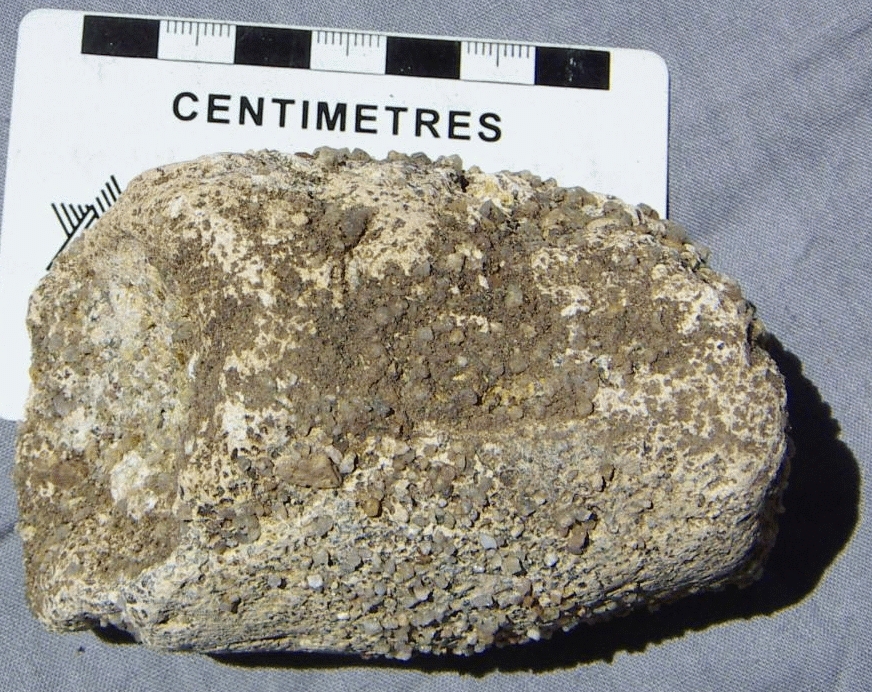
coprolite -fossilised dropping - you can learn a lot about a
creature's diet, food sources, the season, the weather and the
creature's health from fossilised poo
We took rural and remote students on free expeditions 1992 - 2006
many thanks to the aboriginal students from more traditional
communities who were able to combine their traditional affinity with
the land, a keen eye and cutting edge science
We took on the name Far North Queensland Fossil Heritage
Expeditions in 1997 in order to get a once of $1500 grant to cover
part of our fuel costs
We entered properties only at the request of the landowners and at
their request donated significant finds to Australian Museums or
Universities
Minor finds are used for touring displays of local North Queensland
Schools and as teaching material in senior Earth Science
Some fragments are used as teaching materials in local classrooms
digs were carried out entirely by volunteers at considerable
personal expense, after tax and out of pocket (**webmaster note: much
like this website!**)
over the 14 years of the expeditions we received no reliable support
but achieved a lot,
just get on and do stuff that is good for the country, don't expect
help.
We support The Queensland Museum - Kronsaurus Korner P.O. Box 113, 91
Goldring Street, Richmond, Queensland Australia telephone +061 070 413 429